Big Cats
Explore the world of big cats, from lions and tigers to leopards and jaguars. These quizzes cover identification, habitats, behavior, and conservation, helping you spot key traits and compare species with confidence.
Quizzes
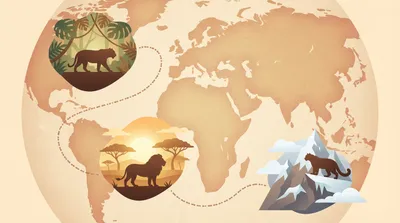

What you'll find here
- Curated quizzes focused on Big Cats
- Difficulty spread from easy to hard
- Randomized questions with instant feedback
- Quizzes you can replay and compare on the leaderboard
See this category in other languages
Category FAQ
How many quizzes are available in Big Cats?
There are 3 quizzes with 226 questions total.
Are these big cat quizzes timed?
No. Each question has 4 options and there is no timer, so you can work at your own pace.
What topics do the Big Cats quizzes cover?
They focus on species identification, habitats and range, behavior and hunting, anatomy, and conservation.
Do the quizzes include different difficulty levels or lengths?
Yes. Quiz sets vary in length and difficulty, so you can choose easier practice or more challenging question sets.
Will I learn how to tell similar species apart?
Yes. Many questions target distinguishing features like coat patterns, body build, habitat clues, and geographic range.
More to explore
What you’ll learn about big cats
These Big Cats quizzes help you practice species recognition, anatomy and adaptations, range and habitat, hunting behavior, and conservation status.
You’ll also compare close look-alikes (like leopard vs jaguar) and learn how geography and ecology shape each cat’s traits.
How the quizzes work
Each question has 4 answer options and there’s no timer, so you can focus on accuracy and learning from each attempt.
Quizzes vary in difficulty and length, so you can start with quick refreshers and move up to more detailed sets as you improve.
Big cat facts and context
“Big cats” commonly refers to members of the genus Panthera (lion, tiger, leopard, jaguar, and snow leopard), known for a specialized throat structure that enables roaring in most species.
Despite their power and wide appeal, many big cat populations face pressure from habitat loss, prey decline, and human–wildlife conflict, making conservation knowledge especially relevant.
Tips for scoring higher
- Use coat patterns and body shape to separate similar species (spots, rosettes, stripes, tail length).
- Match each species to its core range (e.g., Americas vs Africa/Asia) before choosing an answer.
- Learn key habitat clues: savanna, rainforest, mountains, or snowy highlands.
- Watch for behavior hints like solitary vs social hunting and typical prey.
- Review conservation terms (endangered, vulnerable, near threatened) and what they imply.