Road Signs
Learn to recognize and interpret common road signs used in everyday driving. These quizzes cover warnings, regulations, and guidance signs to help you make safer decisions on the road and prepare for driving theory tests.
Quizzes
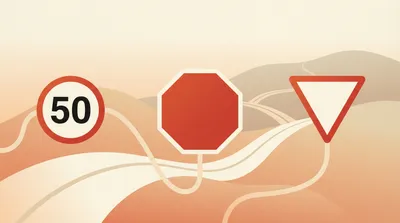

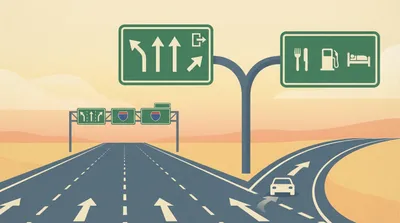
What you'll find here
- Curated quizzes focused on Road Signs
- Difficulty spread from easy to hard
- Randomized questions with instant feedback
- Quizzes you can replay and compare on the leaderboard
See this category in other languages
Category FAQ
How many quizzes are available?
There are 3 quizzes with 334 questions total.
Are the Road Signs quizzes timed?
No. Each question has 4 options and there is no timer, so you can work at your own pace.
What kinds of road signs are covered?
You’ll see a mix of regulatory, warning, and guide/information signs, including common symbols used in everyday driving.
Do the quizzes include easy and hard questions?
Yes. The set includes varying difficulty, from basic sign recognition to questions that apply signs to driving scenarios.
Will these quizzes help with driving theory test prep?
They’re useful for practicing sign meanings and decision-making, which are core skills in most driving theory exams.
More to explore
What you’ll practice
These Road Signs quizzes help you identify sign shapes, colors, and symbols, and choose the correct meaning in realistic driving situations.
You’ll practice quick recognition of regulatory, warning, and guide signs so you can react correctly at intersections, merges, crossings, and changing road conditions.
How the quizzes work
Each question has 4 answer options, and there’s no timer, so you can focus on accuracy and learning from mistakes.
Quizzes vary in length and difficulty, with a mix of straightforward sign-meaning questions and scenario-based items that require applying the sign to a driving decision.
Road sign facts and tips
Many sign systems use consistent design rules: triangles often warn, circles regulate, and rectangles provide information - so the shape can hint at the message before you read it.
- Use shape first: it often signals warning vs regulation vs information.
- Color matters: red commonly indicates prohibition/stop, while yellow/amber often signals caution.
- Look for added plates: they can limit when a sign applies (time, vehicle type, distance).
- Prioritize critical signs: stop, yield, speed limits, and no-entry affect right-of-way and safety.
- Practice tricky pairs: similar symbols can mean very different actions (merge vs lane ends).
- Think context: the same sign can imply different choices depending on road layout and traffic.