Cold War
Explore the Cold War era through quizzes on key events, leaders, crises, and competing ideologies. Review timelines from the end of World War II to the Soviet Union’s collapse, and sharpen your understanding of how global politics, alliances, and proxy conflicts shaped the modern world.
Quizzes


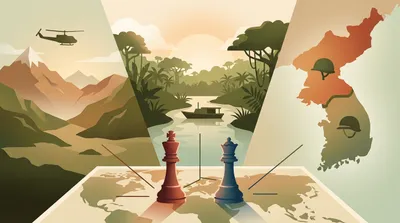
What you'll find here
- Curated quizzes focused on Cold War
- Difficulty spread from easy to hard
- Randomized questions with instant feedback
- Quizzes you can replay and compare on the leaderboard
See this category in other languages
Category FAQ
How many quizzes are available?
There are 3 quizzes with 355 questions total.
Do these Cold War quizzes have a timer?
No. Each question has 4 options and no timer, so you can answer at your own pace.
What topics are covered in this Cold War category?
Expect questions on major events, leaders, alliances, proxy wars, nuclear strategy, and key agreements from 1945 to 1991.
Are the quizzes suitable for different difficulty levels?
Yes. The 3 quizzes vary in length and difficulty, from foundational facts to more detailed event-and-treaty questions.
How many questions are there across all quizzes?
There are 355 questions across the 3 Cold War quizzes.
More to explore
What you’ll practice
These Cold War quizzes help you recall major turning points, from early postwar tensions and containment to détente, renewed confrontation, and the USSR’s dissolution. You’ll also practice connecting events across regions, including Europe, Asia, Africa, and the Americas.
How the quizzes work
Each question is multiple-choice with 4 options and no timer, so you can focus on accuracy and learning. Quizzes vary in length and difficulty, letting you start with core concepts and move toward more detailed questions on specific crises, agreements, and leaders.
Key themes to know
- Origins of the Cold War: ideology, spheres of influence, and post-1945 settlements
- Alliances and blocs: NATO, the Warsaw Pact, and non-alignment
- Flashpoints: Berlin, Cuba, Korea, Vietnam, and Afghanistan
- Nuclear strategy: deterrence, MAD, arms races, and arms control
- Intelligence and influence: propaganda, espionage, and covert operations
Quick context and interesting facts
The Cold War rarely became a direct war between the superpowers, but it reshaped everyday life through civil defense planning, space competition, and global media narratives. Even cultural exports - sports, film, and technology - became tools of influence alongside diplomacy and military power.