Algebra
Sharpen your algebra skills with quizzes covering expressions, equations, and functions. Practice simplifying, solving, and interpreting algebraic relationships step by step. Each quiz focuses on common problem types you’ll see in school and competitive exams.
Quizzes

What you'll find here
- Curated quizzes focused on Algebra
- Difficulty spread from easy to hard
- Randomized questions with instant feedback
- Quizzes you can replay and compare on the leaderboard
Category FAQ
How many quizzes are available in Algebra?
There are 3 quizzes with 298 questions total.
What skills do these Algebra quizzes cover?
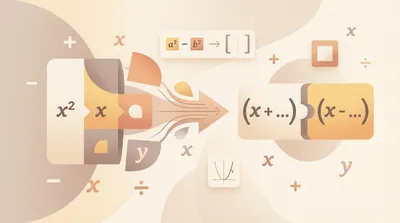
They focus on simplifying expressions, solving equations, factoring, and working with functions and graphs.
How are the Algebra quiz questions formatted?
Each question has 4 answer options, and there is no timer.
Are the Algebra quizzes suitable for different difficulty levels?
Yes. The set includes a mix of easier and more challenging questions, with quiz length and complexity varying across the category.
Do I need advanced math to start these Algebra quizzes?
No. You can begin with basic algebra fundamentals and progress to multi-step problems as you get comfortable.
More to explore
What you’ll practice in Algebra
These algebra quizzes help you practice simplifying expressions, solving linear and quadratic equations, and working with functions and graphs.
You’ll also build accuracy with factoring, manipulating formulas, and translating word problems into equations.
How the quizzes work
Each question is multiple-choice with 4 options, and there’s no timer, so you can focus on method and checking your steps.
Quizzes vary in difficulty and length across the set, so you can start with fundamentals and move toward more multi-step problems as you improve.
Helpful algebra checkpoints
- Simplify expressions using order of operations and like terms
- Solve equations and inequalities and verify solutions
- Factor and expand polynomials accurately
- Work with exponents, radicals, and rational expressions
- Interpret functions, slope, and basic graph features
Quick context: why algebra matters
Algebra is the language of patterns and relationships: it lets you generalize arithmetic into rules that work for any number. Many later topics - calculus, statistics, physics, and computer science - rely on algebraic manipulation as a core tool.