Weather
Explore the science behind Weather and build confidence reading forecasts and understanding everyday conditions. Practice key concepts like temperature, pressure, humidity, clouds, and precipitation, with a focus on Extreme Weather. Learn how weather forms and why it can change so quickly from place to place.
Subcategories
Quizzes



What you'll find here
- Curated quizzes focused on Weather
- Difficulty spread from easy to hard
- Randomized questions with instant feedback
- Quizzes you can replay and compare on the leaderboard
Category FAQ
How many Weather quizzes are available on Baviro?
There are 3 quizzes with 333 total questions in the Weather category.
What topics are covered in the Weather category?
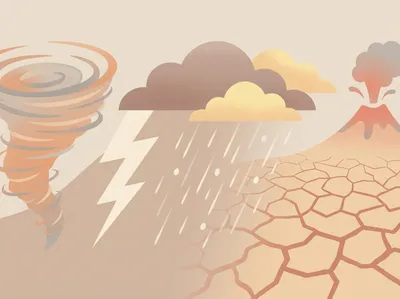
Topics focus on Extreme Weather, including storms, hurricanes, tornadoes, blizzards, heatwaves, floods, and weather safety basics.
How do Weather quizzes work on Baviro?
You answer multiple-choice questions (4 options each). You can take any of the 3 quizzes anytime and work through all 333 questions at your own pace.
Are these quizzes good for learning or just testing knowledge?
Both. With 3 quizzes and 333 questions, you can practice key terms, recognize extreme weather patterns, and review safety and preparedness concepts.
More to explore
What you’ll practice
Weather quizzes help you connect common forecast terms to real atmospheric processes, from cloud types to storm development. The Extreme Weather subcategory focuses on the conditions that produce severe storms and unusual events.
How the quizzes work
Each quiz question has 4 answer options and there’s no timer, so you can think through patterns, definitions, and cause-and-effect. Use them to revise basics or challenge yourself with scenario-style questions.
Fast facts about weather
Weather happens in the troposphere, the lowest layer of the atmosphere where most water vapor and clouds exist. A small temperature difference can drive huge energy transfers, which is why storms can intensify rapidly.
- 4 options per question, choose the best answer
- No timer: learn at your own pace
- Covers clouds, precipitation, wind, and air pressure
- Includes Extreme Weather concepts like thunderstorms, tornadoes, and hurricanes
- Great for students, trivia fans, and forecast watchers
- Helpful for building real-world weather literacy
Tips for better results
Focus on understanding relationships (warm air rises, pressure changes drive wind, moisture fuels clouds) rather than memorizing isolated facts. Reviewing missed questions is the quickest way to improve.