Shark senses: smell, hearing, and electroreception
Put your shark-sense knowledge to the test, from odor tracking and low-frequency hearing to the electric “sixth sense” that finds hidden prey. Questions span anatomy, behavior, and real-world research...
Start Quiz
Pick a difficulty and question count to begin.
About this quiz
What you’ll explore
Sharks don’t rely on one super-sense - they combine smell, hearing, vision, touch, and electroreception to build a detailed picture of their world. This quiz focuses on how those systems work and what they can (and can’t) do in real conditions.
Expect a mixed set of questions that moves between fundamentals (key organs and terms) and applied scenarios (how a shark homes in on a struggling fish, or why certain signals travel farther underwater).
Format and difficulty settings
Every question has 4 options and there’s no timer, so you can think through cues and eliminate distractors. You can also choose your question count and difficulty before you start - shorter runs are great for quick practice, while longer runs help you build consistency across topics.
To keep things fair, the difficulty is balanced: easier recall questions are mixed with more detailed items on mechanisms, comparisons between senses, and common misconceptions.
Common pitfalls to avoid
- Overstating smell range without considering currents and dilution
- Mixing up electroreception with magnetoreception (they’re not the same)
- Assuming hearing works best at “high pitch” rather than low-frequency cues
- Forgetting that behavior depends on context (species, habitat, distance)
- Confusing the roles of nostrils (smell) vs breathing (gills)
Skills you’ll practice
You’ll strengthen core vocabulary (like ampullae of Lorenzini), link structures to functions, and interpret simple cause-and-effect scenarios about detection and tracking. By the end, you should be quicker at spotting which sense is most likely responsible in a given situation - and why.
Sample questions
What percentage of a shark's brain is dedicated to its sense of smell?
- A.60%
- B.30%
- C.50%
- D.80%
How far can sharks detect blood in the water?
- A.Up to a mile away
- B.100 yards
- C.5 miles
- D.500 feet
Which part of a shark's body is primarily responsible for electroreception?
- A.Ampullae of Lorenzini
- B.Nasal cavity
- C.Lateral line
- D.Pectoral fins
Quiz FAQ
How many questions are in this quiz?
This quiz has 110 questions on shark smell, hearing, and electroreception.
Is there a timer or time limit?
No - there’s no timer, so you can answer at your own pace.
What answer format does the quiz use?
Each question is multiple-choice with 4 options.
Can I choose the number of questions and difficulty?
Yes. Pick your preferred question count and difficulty before starting; this quiz is set up for mixed difficulty overall.
What topics are covered besides smell?
You’ll also cover underwater hearing, vibration cues, and electroreception via the ampullae of Lorenzini, plus how sharks combine senses while hunting.
Play this quiz in another language(7)
Related Quizzes
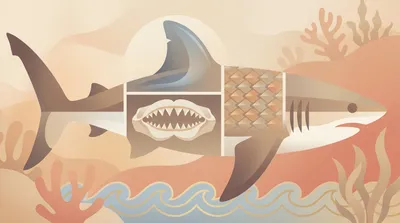
Shark anatomy: fins, teeth, and skin
Explore how sharks are built from the outside in, focusing on fins, teeth, and skin. You’ll identify key structures and what they do, then apply that knowledge to real-world shark behavior and survival. Great for learners who want quick, clear anatomy practice without getting lost in jargon.

Shark reproduction: eggs, live birth, and nurseries
Explore how sharks reproduce through egg-laying, live birth, and everything in between. This quiz covers key terms like oviparity, viviparity, and ovoviviparity, plus the role of nurseries and mating strategies. Choose your question count and difficulty to match your comfort level, then learn as you go - no timer pressure.

What happens next in scenes?
Think you can predict the next beat in a family-movie scene? This quiz drops you into familiar moments and asks what happens next, based on context clues, character habits, and classic storytelling. Pick your answer and see how well you remember the setup-to-payoff rhythm.

Brain lobes and core functions
Map the brain’s major lobes to what they do in everyday thinking and behavior. This mixed-difficulty quiz checks your grasp of frontal, parietal, temporal, and occipital functions, plus key “core” structures. Each question uses 4 options and there’s no timer, so you can focus on accuracy.

Guess the song from emoji clues
Decode emoji riddles into real songs in this playful music challenge. Each clue hints at a title, lyric, or artist reference - your job is to connect the icons to the track. With a mixed difficulty set, you’ll see both instant classics and trickier brain-teasers.

Guess the song from one lyric
Can you name the track from a single lyric? This mixed-difficulty quiz spans classics, pop hits, rock anthems, and modern chart-toppers, all with just one line to go on. Pick your preferred question count and difficulty, then see how many songs you can recognize on sight.