Silk Road trade and cultural exchange
Trace how the Silk Road linked empires, cities, and cultures from China to the Mediterranean. This quiz explores the goods, ideas, and technologies that moved along caravan routes and sea lanes, and t...
Start Quiz
Pick a difficulty and question count to begin.
About this quiz
What you’ll explore on the Silk Road
From oasis towns to imperial courts, the Silk Road was a network of routes that moved far more than silk. You’ll review key regions, time periods, and the cultural exchanges that shaped Eurasian history.
Each question has 4 options and there’s no timer, so you can focus on reasoning through context instead of rushing.
Skills you’ll practice
You’ll strengthen your ability to connect trade goods to places, match religions and technologies to their diffusion paths, and spot cause-and-effect links between commerce and cultural change.
To fit your study plan, choose your question count and select an easier or harder setting; the overall difficulty is mixed, so you’ll see a balanced blend of recall and interpretation.
Common pitfalls (and how to avoid them)
Many players mix up “Silk Road” as a single road instead of a shifting network, or assume exchange was one-way from East to West. Another frequent mistake is confusing who carried what - merchants, nomads, pilgrims, and diplomats often played different roles.
Quick tips before you start
- Treat the Silk Road as multiple routes (overland and maritime), not one path
- Link goods to regions (e.g., silk, spices, horses, glass, paper) rather than memorizing lists
- Watch for time-period clues (Han/Tang, Abbasids, Mongol era) that change the context
- Separate cultural diffusion (religions, art styles) from direct trade commodities
- Use process-of-elimination with the 4 options when two answers seem similar
Sample questions
What was the primary purpose of the Silk Road?
- A.Trade of goods and cultural exchange
- B.Military conquest
- C.Religious pilgrimage
- D.Colonial expansion
Which luxury item was most famously traded along the Silk Road?
- A.Silk
- B.Wool
- C.Cotton
- D.Leather
During which historical period did the Silk Road peak in use?
- A.Han Dynasty
- B.Qin Dynasty
- C.Tang Dynasty
- D.Song Dynasty
Quiz FAQ
How many questions are in this quiz?
This quiz has 107 questions on Silk Road trade and cultural exchange.
Is the Silk Road quiz timed?
No. There’s no timer, so you can answer at your own pace.
What answer format does the quiz use?
Each question is multiple-choice with 4 options.
Can I choose the number of questions and difficulty?
Yes. You can adjust the question count and pick an easier or harder setting before you start.
What topics are covered besides trade goods?
It also covers cultural exchange such as religions, technologies, diseases, and the roles of empires and intermediaries.
Play this quiz in another language(7)
Related Quizzes
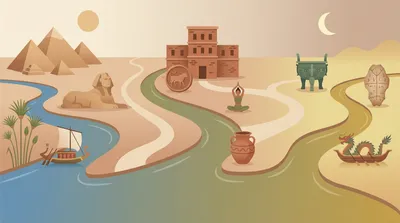
Ancient river civilizations: Nile, Indus, and Huang He
Trace how the Nile, Indus, and Huang He shaped some of the world’s earliest civilizations. This mixed-difficulty quiz covers geography, farming, cities, writing, rulers, and belief systems. Build a clear timeline and compare what made each river society unique.
Classical Greece and Rome essentials
Step into the world of Classical Greece and Rome with a focused essentials quiz. Review key events, people, ideas, and everyday life from city-states to empire. Choose your question count and difficulty, then test what you know at your own pace.

What happens next in scenes?
Think you can predict the next beat in a family-movie scene? This quiz drops you into familiar moments and asks what happens next, based on context clues, character habits, and classic storytelling. Pick your answer and see how well you remember the setup-to-payoff rhythm.

Brain lobes and core functions
Map the brain’s major lobes to what they do in everyday thinking and behavior. This mixed-difficulty quiz checks your grasp of frontal, parietal, temporal, and occipital functions, plus key “core” structures. Each question uses 4 options and there’s no timer, so you can focus on accuracy.
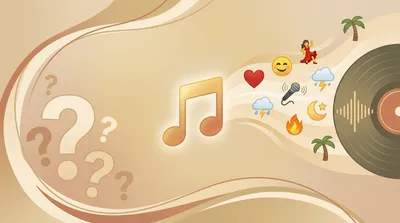
Guess the song from emoji clues
Decode emoji riddles into real songs in this playful music challenge. Each clue hints at a title, lyric, or artist reference - your job is to connect the icons to the track. With a mixed difficulty set, you’ll see both instant classics and trickier brain-teasers.
Guess the song from one lyric
Can you name the track from a single lyric? This mixed-difficulty quiz spans classics, pop hits, rock anthems, and modern chart-toppers, all with just one line to go on. Pick your preferred question count and difficulty, then see how many songs you can recognize on sight.