Civics Basics
Build a solid foundation in Civics Basics with quick quizzes on government, citizens’ rights, and civic responsibilities. Review key terms, institutions, and how laws and elections work, then check your understanding question by question.
Quizzes

What you'll find here
- Curated quizzes focused on Civics Basics
- Difficulty spread from easy to hard
- Randomized questions with instant feedback
- Quizzes you can replay and compare on the leaderboard
Category FAQ
How many quizzes are available?
There are 3 quizzes with 355 questions total.
Do these Civics Basics quizzes have a timer?
No. There is no timer, so you can answer at your own pace.
How are the questions formatted?
Each question is multiple-choice with 4 options.
What topics are covered in Civics Basics?
You’ll see questions on government structure, laws, elections, citizens’ rights, and civic responsibilities.
Are the quizzes all the same difficulty and length?
No. Quiz length and difficulty vary, so you can start with easier sets and move to more challenging ones.
More to explore
What you’ll practice in Civics Basics
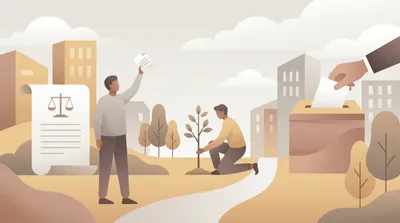
These quizzes help you practice the essentials of civic life, including how governments are organized, what citizens can do, and why rules and laws exist.
You’ll review common civics vocabulary and real-world scenarios about rights, responsibilities, elections, and public institutions.
How the quizzes work
Each question comes with 4 options, and there’s no timer, so you can focus on accuracy and learning as you go.
Difficulty and length vary across the set: some quizzes are shorter for quick revision, while others go deeper to test understanding across multiple civics themes.
Helpful context and quick tips
Civics connects everyday life to public decision-making - things like voting, paying taxes, serving on a jury, and using public services are all part of how a society functions.
- Identify the branch or level of government involved (local, state, national)
- Separate “rights” (protections) from “responsibilities” (expected duties)
- Watch for keywords like “checks and balances,” “rule of law,” and “representation”
- Use examples (school rules, community issues) to make abstract ideas concrete
- Revisit missed questions to spot patterns in what you confuse
Who this category is for
This category works well for students starting civics, exam prep, or anyone who wants a clear refresher on how government and citizenship work.