Middle School Science
Build confidence in core middle school science topics with quick, focused quizzes. Practice key ideas from life science, physical science, and Earth & space science while sharpening your ability to read questions carefully and choose the best answer.
Quizzes
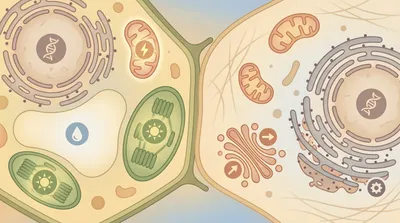


What you'll find here
- Curated quizzes focused on Middle School Science
- Difficulty spread from easy to hard
- Randomized questions with instant feedback
- Quizzes you can replay and compare on the leaderboard
Category FAQ
How many quizzes are available?
There are 3 quizzes with 343 questions total.
Are these quizzes timed?
No. Each quiz has no timer, so you can work at your own pace and focus on understanding.
How are the questions formatted?
All questions are multiple-choice with 4 options, with one best answer.
What topics are covered in Middle School Science?
You’ll see a mix of life science, physical science, and Earth & space science topics commonly taught in grades 6–8.
Do the quizzes include different difficulty levels or lengths?
Yes. Quizzes can vary in length and difficulty, so you can start with basics and move to more challenging review.
More to explore
What you’ll practice
These Middle School Science quizzes help you review the big ideas typically covered in grades 6–8, from cells and ecosystems to forces, energy, weather, and the solar system.
You’ll practice interpreting simple models, reading graphs and data tables, and applying vocabulary in context rather than memorizing isolated definitions.
How the quizzes work
Each question is multiple-choice with 4 options, and there’s no timer - so you can focus on accuracy and understanding.
Quiz length and difficulty can vary across sets, letting you start with fundamentals and move toward more mixed, application-style questions as you improve.
- Life science: cells, heredity, ecosystems, and human body basics
- Physical science: matter, atoms, forces, motion, and energy
- Earth & space: rocks, plate tectonics, weather, climate, and space systems
- Skills focus: experiments, variables, and drawing conclusions from evidence
- Common classroom format: clear prompts with one best answer
Quick context and interesting facts
Middle school science is often where students first connect “small-scale” ideas (like particles and cells) to “big-scale” systems (like climate and ecosystems), using evidence from labs and observations.
Many everyday technologies - batteries, water filters, and weather forecasts - depend on the same core concepts you’ll see here: energy transfer, properties of materials, and patterns in data.