Languages By Language
Explore language quizzes organized by language to build vocabulary, grammar awareness, and real-world phrases. Practice across French, Korean, Arabic, Latin, Chinese, Russian, Phrasebook, Spanish, and Italian. Use this category to compare language families, scripts, and everyday expressions as you learn.
Subcategories


Quizzes
Cyrillic letters and their sounds

Latin verb tenses and principal parts
Cases in Russian: core uses

Identify Chinese radicals in characters

Spanish preterite vs imperfect clues

Restaurant phrases: ordering and dietary needs
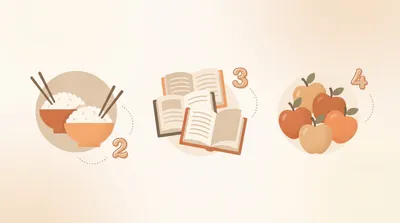
Recognize basic Chinese measure words

Italian articles: il, lo, and la

Ser vs estar in everyday Spanish

Choose the right Chinese aspect particle

Por vs para with real contexts
Perfective vs imperfective verb meaning
What you'll find here
- Curated quizzes focused on Languages By Language
- Difficulty spread from easy to hard
- Randomized questions with instant feedback
- Quizzes you can replay and compare on the leaderboard
Category FAQ
How many Languages By Language quizzes are available?
There are 27 quizzes with 3053 total questions in the Languages By Language category.
What languages and topics are included in this category?
Topics span French, Korean, Arabic, Latin, Chinese, Russian, Phrasebook, Spanish, and Italian, covering vocabulary, phrases, and language basics across 27 quizzes.
How do the Languages By Language quizzes work?
Pick a quiz and answer multiple-choice questions as you go. Across 27 quizzes you’ll find 3053 questions, great for quick practice and review.
Are these quizzes good for beginners or advanced learners?
They suit mixed levels: start with Phrasebook and basics, then move into deeper vocabulary and language-specific sets in French, Spanish, Chinese, and more.
More to explore
What you’ll practice
Build confidence with core language skills like common words, basic grammar patterns, and practical expressions across multiple languages.
How the quizzes work
Each quiz uses multiple-choice questions with 4 options and no timer, so you can learn at your own pace and review as you go.
Languages and fun facts
French and Spanish are widely spoken Romance languages, while Russian uses the Cyrillic script and Arabic is written right-to-left. Chinese is tonal and uses characters, and Korean’s Hangul was designed to be easy to learn; Latin remains influential in science, law, and many modern vocabularies.
Tips for better results
- Focus on high-frequency words before rare vocabulary
- Say answers out loud to improve pronunciation memory
- Notice cognates (shared roots) between related languages
- Pay attention to scripts and direction (Arabic, Chinese, Russian)
- Use the Phrasebook subcategory for travel-ready expressions