Political Systems
Explore how countries organize power and make decisions through different political systems. You’ll learn and practice key ideas from Political Ideologies, Democracy And Elections, and Parliamentary Vs Presidential, including how leaders are chosen and how governments are structured. Great for building civics vocabulary and comparing real-world examples.
Subcategories
Quizzes
Democratic institutions: checks, rights, and accountability
Confidence, impeachment, and removing leaders
Socialism: branches and key debates

Conservatism: tradition, order, and change
Core ideas of liberalism
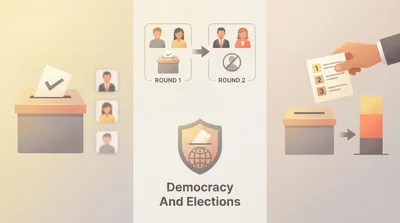
Voting systems: plurality, runoff, and ranked choice

How elections are run: ballots and counts

Separation of powers and legislative control

How executives are chosen in each system
What you'll find here
- Curated quizzes focused on Political Systems
- Difficulty spread from easy to hard
- Randomized questions with instant feedback
- Quizzes you can replay and compare on the leaderboard
See this category in other languages
Category FAQ
How many Political Systems quizzes are available?
There are 9 quizzes with 1085 total questions in the Political Systems category.
What topics are covered in Political Systems?
Topics include Political Ideologies, Democracy and Elections, and Parliamentary vs Presidential systems, covering institutions, leadership, voting, and how governments are structured.
How do the Political Systems quizzes work?
Pick a quiz and answer multiple-choice questions (4 options each). You can review your results at the end and replay to improve your score.
Are these quizzes good for exam prep or quick revision?
Yes. With 9 quizzes and 1085 questions, you can practice key concepts, compare systems, and reinforce definitions, examples, and real-world applications.
More to explore
What you’ll practice
Political systems shape how laws are made, leaders are selected, and citizens participate in public life. This category helps you compare structures like parliamentary and presidential models and connect them to core ideologies and election rules.
How the quizzes work
Each quiz uses multiple-choice questions with 4 options per question and no timer, so you can think through scenarios and definitions at your own pace. Results help you spot which concepts - institutions, elections, or ideologies - you should review next.
Quick facts to know
Many democracies combine features: a ceremonial head of state with an executive head of government, or mixed electoral systems that blend district and proportional representation. Political ideologies often influence how much power is centralized, how rights are defined, and what the state should do in the economy.
Topics you’ll see
- Key terms: constitution, separation of powers, legitimacy, mandate
- Democracy And Elections: voting systems, turnout, representation, parties
- Parliamentary Vs Presidential: executive formation, confidence votes, veto powers
- Political Ideologies: liberalism, conservatism, socialism, nationalism and more
- Comparing systems using real countries and historical examples