Brain lobes and core functions
Map the brain’s major lobes to what they do in everyday thinking and behavior. This mixed-difficulty quiz checks your grasp of frontal, parietal, temporal, and occipital functions, plus key “core” str...
Start Quiz
Pick a difficulty and question count to begin.
About this quiz
What you’ll learn and practice
Connect each lobe to its hallmark roles - planning and inhibition (frontal), sensation and spatial processing (parietal), hearing and memory/language (temporal), and vision (occipital). You’ll also review core structures often paired with lobe functions, such as thalamic relay, limbic emotion/memory, and cerebellar coordination.
Every item is multiple-choice with 4 options and no timer, making it ideal for careful recall rather than rushed guessing. Choose your preferred question count and difficulty before you start to tailor the session to quick review or deeper practice.
Common pitfalls to avoid
Many learners mix up “where information is processed” with “where it originates,” especially for sensory pathways and association areas. Another frequent trap is treating complex skills (like language) as belonging to only one lobe instead of a network.
How the difficulty stays balanced
This quiz blends straightforward lobe-function matches with scenario-style questions that require applying concepts to symptoms or behaviors. Mixed difficulty means you’ll see both confidence-builders and stretch questions, helping you spot weak areas without getting stuck on only advanced material.
Tips for better scores
- Anchor each lobe to 2–3 signature keywords (e.g., frontal: executive control; occipital: vision) - Watch for “network” clues in language and memory questions (more than one region may be involved) - Separate primary cortex functions from association-area functions - Use elimination: rule out options that describe the wrong sensory modality - Review common lesion patterns and what deficits they produce n
Sample questions
Which lobe of the brain is primarily responsible for processing visual information?
- A.Occipital lobe
- B.Frontal lobe
- C.Temporal lobe
- D.Parietal lobe
What is the primary function of the frontal lobe?
- A.Decision making and problem solving
- B.Processing auditory information
- C.Sensory perception
- D.Visual processing
Which lobe is involved in speech production?
- A.Frontal lobe
- B.Occipital lobe
- C.Temporal lobe
- D.Cerebellum
Quiz FAQ
How many questions are in this quiz?
This quiz has 109 questions covering brain lobes and core functions across mixed difficulty.
Is there a time limit?
No. The quiz has no timer, so you can think through each question at your own pace.
What format are the questions in?
Each question is multiple-choice with 4 options, designed for quick checking and clear feedback.
Can I choose the difficulty or number of questions?
Yes. You can select your preferred question count and difficulty before starting to match your study goal.
What topics are included besides the four lobes?
It also touches core brain structures and how they relate to function, such as relay, emotion/memory, and coordination roles.
Related Quizzes

Action potentials and synaptic transmission
Test how well you understand how neurons fire and communicate. This quiz covers the full journey from resting potential to action potential propagation and synaptic signaling. Expect a mix of fundamentals and applied scenarios, with questions that connect ion channels, neurotransmitters, and postsynaptic responses.

Neuron parts and signal flow
Map the neuron from input to output and learn how signals travel through its key structures. This mixed-difficulty quiz focuses on parts, functions, and direction of information flow, helping you connect anatomy to basic neurophysiology. Pick your preferred question count and difficulty, then answer with 4 options per question - no timer.
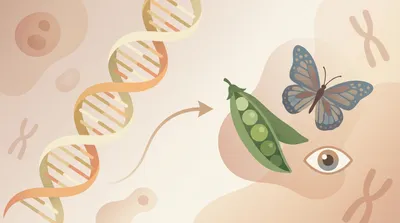
Genetics Basics: Genes To Traits
Explore how traits are inherited through genes and alleles. Covers Mendelian inheritance, dominant/recessive patterns, and simple Punnett-square reasoning.
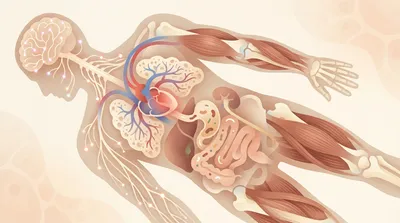
Human Body Systems And Functions
Test your knowledge of major human body systems and what they do. Covers organs, system interactions, and basic physiology terms.
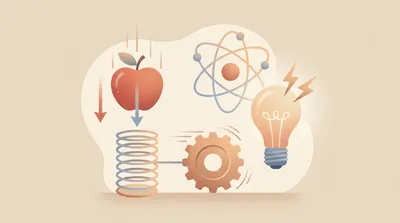
Physics: Forces Motion And Energy
Test core physics concepts behind everyday motion. Covers Newton’s laws, friction, work and energy, momentum, and simple conceptual scenarios.

Astronomy: Stars Planets And Galaxies
Check your understanding of objects and processes in space. Covers star life cycles, planet types, galaxies, and basic observational astronomy terms.