Cat body language: tail, ears, and eyes
Learn to read what cats are really saying with their tails, ears, and eyes. This mixed-difficulty quiz helps you spot subtle signals, avoid common misunderstandings, and build confidence interpreting ...
Start Quiz
Pick a difficulty and question count to begin.
About this quiz
Read the signals cats actually use
Cats communicate constantly through posture and micro-movements, and the tail, ears, and eyes do most of the talking. You’ll practice matching real-world cues to emotions like curiosity, stress, fear, playfulness, and overstimulation.
Each question is multiple-choice with 4 options and no timer, so you can think through the context instead of rushing. Choose your question count before you start, and pick an easy, medium, hard, or mixed setting to match your comfort level.
What you’ll practice (and what trips people up)
- Telling a friendly upright tail from a tense “high and stiff” tail
- Reading ear angles (forward, sideways, pinned back) without guessing from one cue alone
- Interpreting slow blinks, dilated pupils, and hard stares in context
- Spotting overstimulation signs before a swat or bite happens
- Separating playful pouncing from fear-based defensive behavior
Balanced difficulty, realistic scenarios
Difficulty is mixed to keep things fair: straightforward basics appear alongside trickier, context-dependent questions. If you want a smoother learning curve, start on easier settings and increase difficulty as you recognize patterns more reliably.
Tips for better accuracy
Avoid relying on a single body part - tail, ears, and eyes work together, and the same cue can mean different things depending on the situation. When in doubt, prioritize safety signals (pinned ears, tense body, fixed stare) and give the cat space.
Sample questions
What does a cat's upright tail signify?
- A.Happiness and friendliness
- B.Fear and aggression
- C.Hunger
- D.Restlessness
If a cat's ears are pointed forward, what does that indicate?
- A.Interest and curiosity
- B.Discomfort
- C.Aggression
- D.Sleepiness
What does it mean if a cat's tail is twitching?
- A.Excitement or irritation
- B.Calmness
- C.Boredom
- D.Hunger
Quiz FAQ
How many questions are in this quiz?
This quiz has 121 questions focused on cat body language signals from tails, ears, and eyes.
What format is the quiz in?
Each question has 4 options, and there’s no timer so you can answer at your own pace.
Is the difficulty suitable for beginners?
Yes. The quiz is mixed difficulty, and you can also choose an easier setting to start learning the basics.
Can I choose how many questions to answer?
Yes. You can select your preferred question count before starting, from a quick run to a longer session.
What are common mistakes this quiz helps avoid?
It targets common pitfalls like judging mood from the tail alone, misreading dilated pupils, and missing early overstimulation cues.
Play this quiz in another language(7)
Related Quizzes
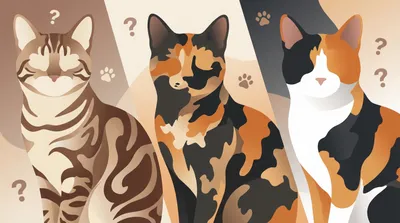
Cat coat patterns: tabby, tortie, and calico
Spot the difference between tabby stripes, tortie mottling, and calico patches in this cat coat pattern quiz. You’ll work through real-world pattern terms, genetics basics, and common look-alikes. Choose your preferred question count and difficulty, then answer at your own pace with no timer.
Indoor cat care: enrichment and routines
Build a happier indoor life for your cat with questions on enrichment, routines, and stress-free care. You’ll cover play, feeding, litter habits, scratching needs, and multi-cat harmony. Choose how many questions you want and a difficulty level to match your experience.

What happens next in scenes?
Think you can predict the next beat in a family-movie scene? This quiz drops you into familiar moments and asks what happens next, based on context clues, character habits, and classic storytelling. Pick your answer and see how well you remember the setup-to-payoff rhythm.

Brain lobes and core functions
Map the brain’s major lobes to what they do in everyday thinking and behavior. This mixed-difficulty quiz checks your grasp of frontal, parietal, temporal, and occipital functions, plus key “core” structures. Each question uses 4 options and there’s no timer, so you can focus on accuracy.

Guess the song from emoji clues
Decode emoji riddles into real songs in this playful music challenge. Each clue hints at a title, lyric, or artist reference - your job is to connect the icons to the track. With a mixed difficulty set, you’ll see both instant classics and trickier brain-teasers.

Guess the song from one lyric
Can you name the track from a single lyric? This mixed-difficulty quiz spans classics, pop hits, rock anthems, and modern chart-toppers, all with just one line to go on. Pick your preferred question count and difficulty, then see how many songs you can recognize on sight.