Daily life in Athens and Sparta
Step into the streets, homes, and training grounds of Classical Greece with a focused look at Athens and Sparta. Compare how citizens learned, worked, worshipped, and prepared for war. Expect a mixed-...
Start Quiz
Pick a difficulty and question count to begin.
About this quiz
What you’ll explore in Athens and Sparta
Daily life in Athens and Sparta wasn’t just “democracy vs militarism” - it shaped education, family roles, religion, work, and public space in very different ways. This quiz helps you connect social customs to larger political and military outcomes.
Each question uses 4 options and there’s no timer, so you can slow down and think through context clues. Choose your question count before you start, and pick a difficulty setting (or keep it mixed) to match how confident you feel.
Skills you’ll practice
You’ll practice spotting what’s uniquely Athenian or Spartan in short descriptions, matching institutions to their purpose, and recognizing how class, citizenship, and gender affected everyday experiences. The mixed difficulty balances straightforward recall (key terms and roles) with comparison questions that test nuance.
Common pitfalls (and how to avoid them)
Many misses come from overgeneralizing: assuming all Greeks lived similarly, or treating later stereotypes as facts. Another trap is mixing up civic life (assemblies, courts, festivals) with military structures (training systems, obligations) when the question is really about daily routine.
How the difficulty is balanced
You’ll see a blend of easy identifiers, medium “which is more likely” scenarios, and harder items that ask you to compare two similar-sounding practices. If you’re new, start with fewer questions on an easier setting; if you’re revising for depth, increase the count and keep difficulty mixed.
- Compare education, upbringing, and expectations for youths in both poleis
- Identify roles of citizens, non-citizens, and enslaved people in daily work
- Distinguish public life: assemblies, courts, messes, and communal routines
- Track religion and festivals as part of everyday identity and duty
- Avoid common mix-ups between Spartan training culture and Athenian civic culture
Sample questions
What was the primary focus of education for boys in Athens?
- A.Philosophy and arts
- B.Military training
- C.Agriculture
- D.Navigation
Which of the following activities was common for Spartan women?
- A.Physical training and sports
- B.Sewing and weaving
- C.Teaching children
- D.Participating in politics
In Athens, what was a common venue for social gatherings?
- A.The Agora
- B.The Acropolis
- C.The Theater
- D.The Gymnasium
Quiz FAQ
How many questions are in this quiz?
This quiz has 188 questions covering daily life in Athens and Sparta across society, culture, and institutions.
Is the difficulty suitable for beginners?
Yes. The difficulty is mixed, combining basic facts with deeper comparison questions so you can learn as you go.
What is the quiz format?
Each question has 4 options and there is no timer, so you can answer at your own pace.
Can I choose the number of questions and difficulty?
Yes. You can select a question count before starting and choose a difficulty setting, or keep it mixed for variety.
What topics are covered besides politics and war?
It includes education, family life, religion, work, social classes, citizenship, and everyday customs in both city-states.
Play this quiz in another language(7)
Related Quizzes
Greek science and medicine: key thinkers
Trace how Greek thinkers shaped early science and medicine, from observation and anatomy to mathematics and natural philosophy. This mixed-difficulty quiz spotlights key figures, core ideas, and landmark works across Classical Greece. Pick your preferred question count and difficulty, then answer at your own pace with no timer.
Greek Theater Tragedy Comedy Playwrights
Step into the world of Dionysian festivals and the great Athenian stage. This quiz explores Greek theater through tragedy, comedy, and the playwrights who shaped them - from Aeschylus and Sophocles to Aristophanes and beyond. Expect a mixed-difficulty run that rewards both big-picture context and close reading of famous works.
Greek Mythology Gods And Heroes
Step into the world of Olympian gods, legendary heroes, and epic monsters. This mixed-difficulty quiz spans famous myths, family trees, symbols, and key adventures from Classical Greece. Choose your preferred question count and difficulty, then test how well you can match names to stories.
Oracles and divination in Greece
Step into the world of Greek prophecy, sacred signs, and ritual consultation. This quiz explores major oracles like Delphi and Dodona, everyday divination practices, and how Greeks interpreted omens in politics, war, and private life. Expect a mix of myth, religion, and historical detail.
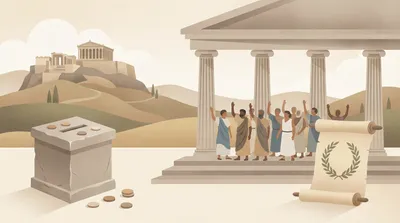
Athenian Democracy Institutions And Offices
Step into the machinery of Athenian democracy and test how well you know its institutions, offices, and procedures. From the Ekklesia and Boule to magistrates and popular courts, this quiz checks both key terms and how the system worked in practice. Choose your preferred question count and difficulty, then learn as you go with instant feedback.
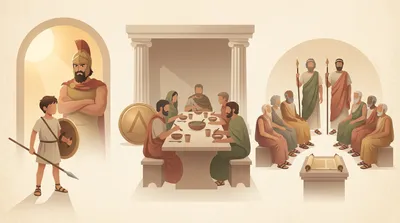
Spartan Society Training And Government
Step into Sparta’s disciplined world and test what you know about its training system and unique political structure. This quiz covers the agoge, social classes, military culture, and the roles of kings, ephors, and the Gerousia. Choose your preferred difficulty and question count to tailor the challenge.