Greek Theater Tragedy Comedy Playwrights
Step into the world of Dionysian festivals and the great Athenian stage. This quiz explores Greek theater through tragedy, comedy, and the playwrights who shaped them - from Aeschylus and Sophocles to...
Start Quiz
Pick a difficulty and question count to begin.
About this quiz
What you’ll explore
From the Theatre of Dionysus to the chorus, masks, and competition culture, this quiz checks how well you know the building blocks of Classical Greek drama. You’ll move between tragedies, comedies, satyr plays, and the major playwrights, with questions that range from introductory to deep-cut.
Every question uses 4 options and there’s no timer, so you can think through names, plots, and terminology without pressure. Before you start, choose your preferred question count and difficulty to tailor the session to quick practice or a full-length challenge.
Skills you’ll practice
You’ll practice identifying playwrights by style and themes, matching plays to authors, and recognizing key dramatic concepts like hamartia, catharsis, parabasis, and the role of the chorus. Expect plenty of “who wrote what” alongside context about festivals, performance conventions, and surviving texts.
Common pitfalls (and how to avoid them)
Many players mix up similarly themed tragedies, confuse Roman adaptations with Greek originals, or misattribute plays among the “big three” tragedians. Another frequent trap is treating comedy as purely slapstick - Old Comedy often includes political satire and direct audience address.
How the difficulty stays balanced
Mixed difficulty means you’ll see a steady blend of accessible questions (major playwrights and famous titles) and tougher ones (lesser-known works, technical terms, and historical context). If you want a smoother learning curve, start on an easier setting with fewer questions, then increase difficulty or length as you improve.
- Identify tragedies vs comedies by plot elements, tone, and structure
- Match Aeschylus, Sophocles, Euripides, and Aristophanes to key works
- Recognize theater terms: chorus, skene, stasimon, parabasis, deus ex machina
- Avoid common misattributions between similarly titled or myth-based plays
- Practice recalling festival context (City Dionysia) and performance conventions
Sample questions
Who is known as the 'Father of Tragedy' in Ancient Greece?
- A.Aeschylus
- B.Sophocles
- C.Euripides
- D.Aristophanes
What is the primary theme of many Greek comedies?
- A.Satire of society
- B.Tragic heroism
- C.Divine retribution
- D.Mythological quests
In which city-state did the tradition of theater, particularly tragedy, flourish?
- A.Athens
- B.Sparta
- C.Corinth
- D.Thebes
Quiz FAQ
How many questions are in this quiz?
This quiz has 200 questions on Greek theater tragedy, comedy, and playwrights.
What format are the questions in?
Each question is multiple-choice with 4 options, and there is no timer.
Is the difficulty suitable for beginners?
Yes. The difficulty is mixed, combining well-known basics with more challenging details.
Can I choose the number of questions and difficulty?
Yes. Pick your preferred question count and difficulty before starting to match your practice goals.
What topics are covered besides playwright names?
You’ll also see play identification, theater vocabulary, performance conventions, and festival context.
Play this quiz in another language(7)
Related Quizzes
Greek science and medicine: key thinkers
Trace how Greek thinkers shaped early science and medicine, from observation and anatomy to mathematics and natural philosophy. This mixed-difficulty quiz spotlights key figures, core ideas, and landmark works across Classical Greece. Pick your preferred question count and difficulty, then answer at your own pace with no timer.
Greek Mythology Gods And Heroes
Step into the world of Olympian gods, legendary heroes, and epic monsters. This mixed-difficulty quiz spans famous myths, family trees, symbols, and key adventures from Classical Greece. Choose your preferred question count and difficulty, then test how well you can match names to stories.
Oracles and divination in Greece
Step into the world of Greek prophecy, sacred signs, and ritual consultation. This quiz explores major oracles like Delphi and Dodona, everyday divination practices, and how Greeks interpreted omens in politics, war, and private life. Expect a mix of myth, religion, and historical detail.
Daily life in Athens and Sparta
Step into the streets, homes, and training grounds of Classical Greece with a focused look at Athens and Sparta. Compare how citizens learned, worked, worshipped, and prepared for war. Expect a mixed-difficulty set that rewards careful reading and solid context.
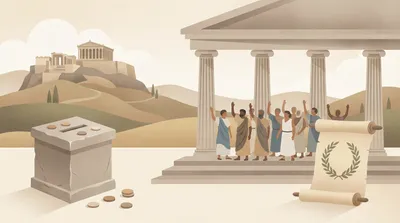
Athenian Democracy Institutions And Offices
Step into the machinery of Athenian democracy and test how well you know its institutions, offices, and procedures. From the Ekklesia and Boule to magistrates and popular courts, this quiz checks both key terms and how the system worked in practice. Choose your preferred question count and difficulty, then learn as you go with instant feedback.
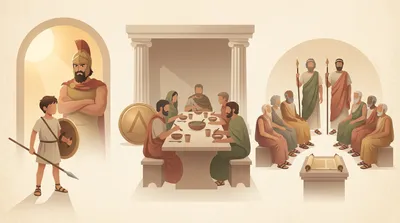
Spartan Society Training And Government
Step into Sparta’s disciplined world and test what you know about its training system and unique political structure. This quiz covers the agoge, social classes, military culture, and the roles of kings, ephors, and the Gerousia. Choose your preferred difficulty and question count to tailor the challenge.