From Estates to National Assembly
Trace the political turning points that carried France from the Estates-General to the birth of the National Assembly. This mixed-difficulty quiz checks your grasp of key dates, actors, and debates, f...
Start Quiz
Pick a difficulty and question count to begin.
About this quiz
What you’ll explore
Move through the pivotal weeks of 1789, from the calling of the Estates-General to the Third Estate’s break with traditional authority. You’ll practice connecting grievances, procedure, and political legitimacy to the formation of the National Assembly.
Each question gives 4 options and there’s no timer, so you can focus on careful reading and historical reasoning rather than speed.
Skills you’ll practice
You’ll sharpen your ability to place events in order, identify major figures and factions, and interpret why procedural disputes mattered as much as street politics. Expect a blend of straightforward recall and “what changed next?” questions that reward a solid timeline.
Common pitfalls to avoid
Many players mix up Estates-General vs. National Assembly vs. Constituent Assembly, or confuse voting “by order” with voting “by head.” Another frequent slip is treating the Tennis Court Oath as an endpoint rather than a catalyst for escalating claims of sovereignty.
Difficulty and settings
Difficulty is balanced by mixing foundational facts with deeper context questions, so beginners can build confidence while advanced players stay challenged. Choose your preferred question count and difficulty before starting to tailor the session to quick practice or a full review.
- Distinguish the Three Estates, their interests, and representation disputes
- Track key moments: cahiers, deadlock, Tennis Court Oath, royal session
- Identify leading voices and institutions shaping early revolutionary authority
- Test cause-and-effect: why procedure triggered constitutional change
- Reinforce precise terms (sovereignty, legitimacy, mandate, veto) without guesswork
Sample questions
What year did the Estates-General meet for the first time since 1614?
- A.1789
- B.1788
- C.1790
- D.1791
What significant event took place on July 14, 1789?
- A.The Storming of the Bastille
- B.The Declaration of the Rights of Man
- C.The Tennis Court Oath
- D.Formation of the National Assembly
Which assembly was convened after the Estates-General in 1789?
- A.National Assembly
- B.Constituent Assembly
- C.Legislative Assembly
- D.Council of the Five Hundred
Quiz FAQ
How many questions are in this quiz?
This quiz has 198 questions focused on the shift from the Estates-General to the National Assembly.
What time period does the quiz mainly cover?
It centers on early 1789, especially the events surrounding the Estates-General, the Tennis Court Oath, and the creation of the National Assembly.
Is this quiz timed?
No. Each question has 4 options and there is no timer, so you can take your time.
Can I choose the number of questions and difficulty?
Yes. You can select your preferred question count and difficulty before you start to match your study goals.
What’s the most common mistake players make here?
Mixing up similarly named assemblies and misunderstanding voting rules (by order vs by head) are the most frequent errors.
Related Quizzes
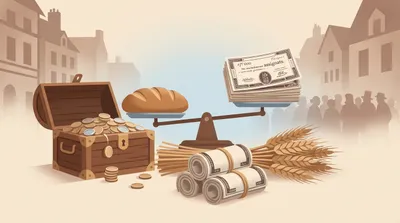
Economic crisis: taxes, bread, and assignats
Step into the French Revolution’s economic storm - tax burdens, bread shortages, and the rise and fall of assignats. This mixed-difficulty quiz checks how well you understand what drove prices, fueled unrest, and shaped policy choices. Build a clearer timeline of crisis, reform, and public reaction.
Religion and the Revolution: church and state
Trace how the French Revolution reshaped the relationship between church and state, from confiscated lands to new civic rituals. This mixed-difficulty quiz covers key laws, debates, and turning points such as the Civil Constitution of the Clergy and the Reign of Terror. Choose your preferred question count and difficulty, then test your understanding with calm, no-timer play.

The Reign of Terror: causes and mechanisms
Step into the most intense phase of the French Revolution and test what you know about why the Terror began and how it operated. This mixed-difficulty quiz explores political pressures, wartime fears, factional conflict, and the institutions that enforced revolutionary justice. Choose your preferred question count and difficulty, then learn as you go - no timer, just focus.

The Declaration of the Rights of Man
Test your knowledge of the Declaration of the Rights of Man and of the Citizen and its role in the French Revolution. Explore key articles, core principles, and the political ideas behind them. Choose your preferred difficulty and number of questions, then learn as you go with instant feedback.
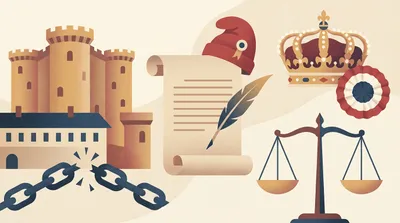
Key events from 1789 to 1791
Test your knowledge of the French Revolution’s turning points from 1789 to 1791, from the Estates-General to the first constitution. This mixed-difficulty quiz focuses on key dates, documents, leaders, and dramatic shifts in power. Choose your preferred question count and difficulty, then answer each question with 4 options and no timer.
War and revolution: 1792 to 1794
Step into the most volatile years of the French Revolution, from the outbreak of war in 1792 to the height of revolutionary government in 1794. Test your grasp of key events, factions, and turning points, then sharpen the details that often get blurred in fast-moving timelines.