Indigenous nations and U.S. expansion
Trace how Indigenous nations shaped, resisted, and negotiated U.S. expansion across North America. You’ll move from early contact and treaty-making to removal, reservation policy, and continued sovere...
Start Quiz
Pick a difficulty and question count to begin.
About this quiz
What this quiz covers
U.S. expansion wasn’t a one-way story - this quiz highlights Indigenous nations as political actors responding to shifting borders, wars, treaties, and federal policy. You’ll see how regional histories differ across the Great Lakes, Plains, Southwest, Southeast, and Pacific Northwest.
Each question uses 4 options and there’s no timer, so you can slow down and focus on context instead of speed. Before you start, choose your question count and difficulty to match your study goal - quick review, targeted practice, or a full mixed run.
Skills you’ll practice
- Identifying key treaties, laws, and court cases that shaped sovereignty and land claims
- Connecting U.S. territorial growth to specific Indigenous nations and regions
- Recognizing cause-and-effect between war, removal, allotment, and reservation systems
- Distinguishing similar events, dates, and policy terms without mixing them up
- Interpreting historical language in primary-source-style phrasing
Common pitfalls (and how to avoid them)
Many players miss questions by treating Indigenous nations as a single group, or by assuming the same policy applied everywhere at the same time. Watch for regional specificity, changing alliances, and the difference between federal promises on paper and outcomes on the ground.
How the difficulty is balanced
Mixed difficulty means you’ll get a blend of foundational facts (major acts, conflicts, and eras) plus deeper items that test nuance, terminology, and less-covered events. If you’re building confidence, start with an easier setting and fewer questions, then increase difficulty or length as your accuracy improves.
Sample questions
What year did the United States formally recognize the sovereignty of the Cherokee Nation?
- A.1831
- B.1845
- C.1789
- D.1820
Which Indigenous nation is known for the Iroquois Confederacy?
- A.Haudenosaunee
- B.Sioux
- C.Cherokee
- D.Navajo
What was the primary purpose of the Dawes Act of 1887?
- A.To assimilate Native Americans into American society
- B.To grant land to Native Americans
- C.To establish reservations
- D.To promote Native American education
Quiz FAQ
How many questions are in this quiz?
This quiz has 138 questions spanning Indigenous nations and U.S. expansion across multiple regions and time periods.
Is the quiz timed?
No - there’s no timer. You can take your time reading each prompt and the 4 answer options.
Can I choose the number of questions and difficulty?
Yes. Pick your preferred question count and difficulty before starting to tailor the session to review or deeper practice.
What topics show up most often?
Expect treaties and federal policy, removal and reservation eras, major conflicts, and regional case studies tied to specific nations.
What’s a common mistake on this topic?
Mixing up similar-sounding acts and treaties or assuming one policy applied uniformly nationwide. Focus on region, date, and who the policy affected.
Play this quiz in another language(7)
Related Quizzes
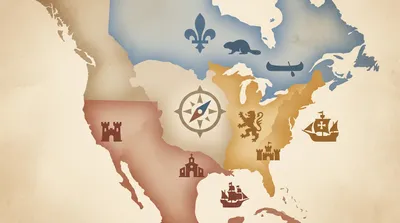
Colonial North America: France, Britain, and Spain
Trace the rivalry and alliances that shaped colonial North America under France, Britain, and Spain. This mixed-difficulty quiz spans exploration, settlement patterns, trade, conflict, and diplomacy. Choose how many questions you want and the difficulty level, then test your recall with four-option questions and no timer pressure.
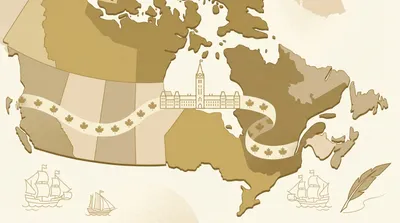
Canada’s road to Confederation
Trace the political debates, regional tensions, and key conferences that led to Canada’s Confederation. This mixed-difficulty quiz spans major figures, dates, and legislation from the 1840s to 1867 and beyond. Pick your question count and difficulty, then test what you remember without a timer.

What happens next in scenes?
Think you can predict the next beat in a family-movie scene? This quiz drops you into familiar moments and asks what happens next, based on context clues, character habits, and classic storytelling. Pick your answer and see how well you remember the setup-to-payoff rhythm.

Brain lobes and core functions
Map the brain’s major lobes to what they do in everyday thinking and behavior. This mixed-difficulty quiz checks your grasp of frontal, parietal, temporal, and occipital functions, plus key “core” structures. Each question uses 4 options and there’s no timer, so you can focus on accuracy.

Guess the song from emoji clues
Decode emoji riddles into real songs in this playful music challenge. Each clue hints at a title, lyric, or artist reference - your job is to connect the icons to the track. With a mixed difficulty set, you’ll see both instant classics and trickier brain-teasers.

Guess the song from one lyric
Can you name the track from a single lyric? This mixed-difficulty quiz spans classics, pop hits, rock anthems, and modern chart-toppers, all with just one line to go on. Pick your preferred question count and difficulty, then see how many songs you can recognize on sight.