Reading vital signs in clinical care
Build confidence reading vital signs the way clinicians do. This mixed-difficulty quiz covers temperature, pulse, respirations, blood pressure, oxygen saturation, and pain scores - plus what changes c...
Start Quiz
Pick a difficulty and question count to begin.
About this quiz
What you’ll practice
Vital signs are more than numbers - they’re early clues to stability, deterioration, and response to treatment. This quiz helps you interpret temperature, HR, RR, BP, SpO₂, and pain in context.
You’ll work through mixed-difficulty items that mirror everyday clinical decisions, from routine checks to urgent changes, with a focus on trends and patient factors.
Format and difficulty controls
Each question has 4 options and there’s no timer, so you can think through scenarios and review your reasoning. Choose your preferred question count and difficulty before you start to tailor the session to quick revision or deeper practice.
Common pitfalls to avoid
Many mistakes come from reading a single value in isolation or ignoring measurement issues. The questions highlight when to recheck, validate technique, and consider baseline conditions.
- Confusing normal ranges across age groups or patient baselines
- Missing trend significance (e.g., rising RR before BP drops)
- Overlooking cuff size/position, motion artifact, or probe placement
- Treating SpO₂ the same on room air vs supplemental oxygen
- Ignoring context like fever, pain, anxiety, meds, or dehydration
How the quiz stays balanced
Difficulty is blended to keep you moving: straightforward range checks are mixed with interpretation and prioritization items. You’ll see repeats of core concepts in varied scenarios to reinforce learning without feeling repetitive.
Sample questions
What is considered a normal resting heart rate for adults?
- A.60-100 beats per minute
- B.40-60 beats per minute
- C.100-140 beats per minute
- D.120-180 beats per minute
What is the normal range for adult blood pressure in mmHg?
- A.120/80
- B.140/90
- C.100/60
- D.160/100
What does a high respiratory rate indicate?
- A.Possible distress or anxiety
- B.Physical fitness
- C.Sleepiness
- D.Low blood pressure
Quiz FAQ
How many questions are in this quiz?
This quiz has 130 questions focused on reading and interpreting vital signs in clinical care.
Is this quiz timed?
No. There is no timer, so you can answer at your own pace and focus on accuracy.
What answer format does the quiz use?
Every question is multiple-choice with 4 options.
Can I choose the number of questions and difficulty?
Yes. You can select your preferred question count and difficulty level before starting.
What topics are covered besides blood pressure?
You’ll also practice temperature, pulse, respiratory rate, oxygen saturation, pain scores, and how trends and context change interpretation.
Play this quiz in another language(7)
Related Quizzes

How vaccines train the immune system
Explore how vaccines prepare your body to fight infections without causing the disease. This mixed-difficulty quiz covers antigens, antibodies, immune memory, and the basics of different vaccine types. Choose your preferred question count and difficulty, then answer each item with 4 options and no timer.

Antibiotics: choosing and using them safely
Build confidence in picking the right antibiotic and using it safely in everyday clinical scenarios. You’ll review indications, dosing basics, allergies, interactions, and stewardship principles while spotting common misconceptions. Mixed difficulty keeps it useful for beginners and a solid refresher for anyone in healthcare.

Genetics Basics: Genes To Traits
Explore how traits are inherited through genes and alleles. Covers Mendelian inheritance, dominant/recessive patterns, and simple Punnett-square reasoning.
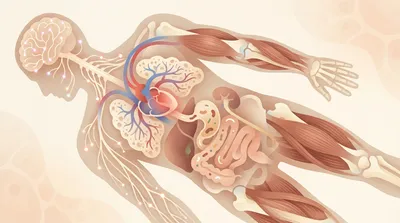
Human Body Systems And Functions
Test your knowledge of major human body systems and what they do. Covers organs, system interactions, and basic physiology terms.

Physics: Forces Motion And Energy
Test core physics concepts behind everyday motion. Covers Newton’s laws, friction, work and energy, momentum, and simple conceptual scenarios.

Astronomy: Stars Planets And Galaxies
Check your understanding of objects and processes in space. Covers star life cycles, planet types, galaxies, and basic observational astronomy terms.