Thermidor and the Directory: aftermath and backlash
Step into the turbulent years after Robespierre’s fall and trace how Thermidor reshaped revolutionary politics. This quiz explores the Thermidorian Reaction, the Directory’s institutions, and the soci...
Start Quiz
Pick a difficulty and question count to begin.
About this quiz
What you’ll explore
From the fall of the Jacobin leadership to the rise of the Directory, these questions focus on how power shifted, how violence changed form, and why stability proved so hard to achieve.
You’ll practice connecting dates and institutions (like the Constitution of Year III) to real political pressures: economic crisis, factional conflict, and war.
Format and difficulty settings
Each question has 4 options and there’s no timer, so you can think through cause-and-effect rather than rushing. Choose your question count before you start, and pick a difficulty level to match your comfort - Mixed blends straightforward recall with deeper interpretation.
Common pitfalls to avoid
Many players mix up the Thermidorian Reaction with the Directory itself, or confuse the “White Terror” with earlier revolutionary violence. Another frequent slip is treating coups as isolated events instead of part of a repeating pattern of instability.
- Distinguish Thermidor (1794) from the Directory era (1795–1799)
- Track key constitutions, councils, and executive structures
- Separate economic drivers (assignats, inflation, scarcity) from political outcomes
- Identify major uprisings and coups and what triggered them
- Recognize how war and the army shaped domestic politics
How the challenge stays balanced
Difficulty is balanced by mixing quick fact checks (names, dates, institutions) with scenario-style questions that test relationships between events. You’ll see easier items to build momentum, then tougher prompts that reward careful reading and historical context.
Sample questions
What event marked the end of the Reign of Terror in 1794?
- A.The Thermidorian Reaction
- B.The Storming of the Bastille
- C.The September Massacres
- D.The Execution of Louis XVI
Which political group was led by Maximilien Robespierre during the Reign of Terror?
- A.The Jacobins
- B.The Girondins
- C.The Royalists
- D.The Sans-culottes
What was the main effect of the Law of Suspects enacted in September 1793?
- A.Increased arrests of perceived enemies
- B.Establishment of a new government
- C.Restoration of monarchy
- D.Abolition of the guillotine
Quiz FAQ
How many questions are in this quiz?
This quiz has 126 questions focused on Thermidor, the Directory, and the backlash after the Terror.
Does the quiz have a timer?
No. Every question is untimed, so you can take your time and think through the context.
What answer format does the quiz use?
Each question is multiple-choice with 4 options, and you select the best answer.
Can I choose the number of questions I play?
Yes. You can set your preferred question count before starting, from a short run to a longer session.
Is the difficulty only for experts?
No. Mixed difficulty includes both accessible recall questions and more challenging cause-and-effect items.
Play this quiz in another language(7)
Related Quizzes
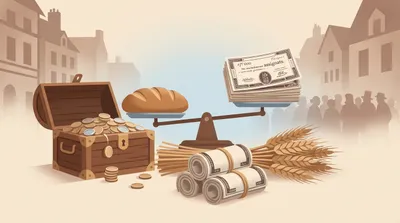
Economic crisis: taxes, bread, and assignats
Step into the French Revolution’s economic storm - tax burdens, bread shortages, and the rise and fall of assignats. This mixed-difficulty quiz checks how well you understand what drove prices, fueled unrest, and shaped policy choices. Build a clearer timeline of crisis, reform, and public reaction.
Religion and the Revolution: church and state
Trace how the French Revolution reshaped the relationship between church and state, from confiscated lands to new civic rituals. This mixed-difficulty quiz covers key laws, debates, and turning points such as the Civil Constitution of the Clergy and the Reign of Terror. Choose your preferred question count and difficulty, then test your understanding with calm, no-timer play.

The Reign of Terror: causes and mechanisms
Step into the most intense phase of the French Revolution and test what you know about why the Terror began and how it operated. This mixed-difficulty quiz explores political pressures, wartime fears, factional conflict, and the institutions that enforced revolutionary justice. Choose your preferred question count and difficulty, then learn as you go - no timer, just focus.
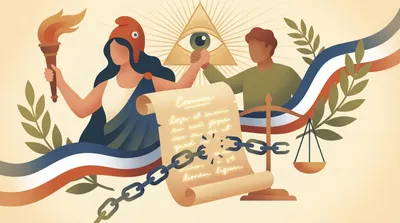
The Declaration of the Rights of Man
Test your knowledge of the Declaration of the Rights of Man and of the Citizen and its role in the French Revolution. Explore key articles, core principles, and the political ideas behind them. Choose your preferred difficulty and number of questions, then learn as you go with instant feedback.
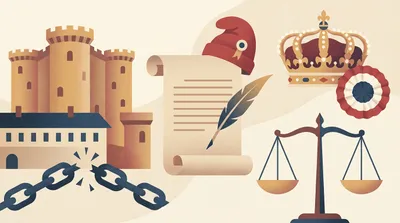
Key events from 1789 to 1791
Test your knowledge of the French Revolution’s turning points from 1789 to 1791, from the Estates-General to the first constitution. This mixed-difficulty quiz focuses on key dates, documents, leaders, and dramatic shifts in power. Choose your preferred question count and difficulty, then answer each question with 4 options and no timer.
War and revolution: 1792 to 1794
Step into the most volatile years of the French Revolution, from the outbreak of war in 1792 to the height of revolutionary government in 1794. Test your grasp of key events, factions, and turning points, then sharpen the details that often get blurred in fast-moving timelines.