Chemistry
Explore Chemistry with quick practice on core ideas like atoms, bonding, and matter. You’ll build confidence reading the Periodic Table and understanding Chemical Reactions through bite-sized quiz questions. Great for students, exam prep, or brushing up on fundamentals.
Subcategories
Quizzes
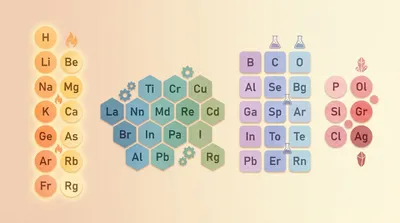
Element families: groups and properties
Balance equations with coefficients only
Element symbols: tricky letter pairs
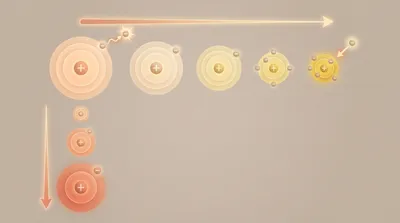
Periodic trends: size, energy, and affinity
Classify reactions: synthesis, decomposition, and more
Predict products for common reaction patterns
What you'll find here
- Curated quizzes focused on Chemistry
- Difficulty spread from easy to hard
- Randomized questions with instant feedback
- Quizzes you can replay and compare on the leaderboard
Category FAQ
How many Chemistry quizzes are available?
There are 6 quizzes with 557 total questions in the Chemistry category.
What topics are covered in the Chemistry category?
Topics include the Periodic Table and Chemical Reactions, covering elements, trends, balancing equations, reaction types, and core chemistry concepts.
How do the Chemistry quizzes work on Baviro?
Each quiz uses 4-option multiple choice questions with no time limit. You can take any of the 6 quizzes and practice across 557 questions.
Is this Chemistry category good for exam practice?
Yes. With 6 quizzes and 557 questions, it’s useful for quick revision and focused practice on the Periodic Table and Chemical Reactions.
More to explore
What you’ll practice
Chemistry explains how substances are made and how they change. This category helps you review key concepts and vocabulary used in school science and competitive exams.
Included topics
Focus on the Periodic Table and Chemical Reactions, from element properties to balancing equations. You’ll also revisit common lab terms and everyday chemistry examples.
How the quizzes work
Each question has 4 answer options and there’s no timer, so you can think carefully and learn as you go.
- Identify element groups (alkali metals, halogens, noble gases)
- Predict trends like atomic radius and electronegativity
- Recognize reaction types (synthesis, decomposition, combustion)
- Practice balancing chemical equations
- Connect acids, bases, and salts to real-life examples
- Review symbols, formulas, and common ions
Quick chemistry facts
The periodic table is arranged by atomic number, and many properties repeat in patterns called periodic trends. Chemical reactions conserve mass, meaning atoms are rearranged but not created or destroyed.