Akkadian Empire: Sargon and successors
Step into the world of the Akkadian Empire and track how Sargon built power - and how his successors tried to hold it together. This mixed-difficulty quiz explores key rulers, campaigns, administratio...
Start Quiz
Pick a difficulty and question count to begin.
About this quiz
What you’ll explore in this quiz
Sargon of Akkad didn’t just conquer cities - he reshaped how power could be organized across Mesopotamia. This quiz follows the rise of the Akkadian Empire and the challenges faced by rulers who inherited Sargon’s model.
Expect a mixed set of questions spanning rulers, chronology, geography, titles, and the political tools used to control distant regions. You’ll also see how later tradition remembered Akkadian kings and why their reigns became reference points.
Format, difficulty, and how to play
Each question gives you 4 options and there’s no timer, so you can think through close choices and learn as you go. Before starting, pick your question count and select a difficulty level - shorter runs are great for quick revision, while longer sessions help you build timeline confidence.
Difficulty is balanced by mixing straightforward identification questions with tougher items that test cause-and-effect, sequence, and similar-looking names or places. If you miss one, use it to spot a pattern (like recurring regions, royal epithets, or common administrative terms).
Skills you’ll practice (and common pitfalls)
- Placing Sargon, Rimush, Manishtushu, Naram-Sin, and Shar-Kali-Sharri in the right order
- Matching campaigns and regions without confusing neighboring city-states and river areas
- Recognizing key terms and titles, including claims of kingship and divinity
- Separating contemporary evidence from later legendary or literary traditions
- Avoiding “name traps” where similar Akkadian and Sumerian forms look interchangeable
Tips to improve your score
When two options feel plausible, anchor your choice to a timeline clue (who came before/after) or a geography clue (core Akkad vs. peripheral regions). Replaying at a higher difficulty after a clean run at mixed mode is the fastest way to turn recognition into real recall.
Sample questions
Who founded the Akkadian Empire?
- A.Sargon
- B.Hammurabi
- C.Nebuchadnezzar
- D.Gilgamesh
What was the official language of the Akkadian Empire?
- A.Akkadian
- B.Sumerian
- C.Babylonian
- D.Aramaic
Which successor of Sargon was known for expanding the empire further?
- A.Naram-Sin
- B.Shar-Kali-Sharri
- C.Rimush
- D.Susa
Quiz FAQ
How many questions are in this quiz?
This quiz has 122 questions covering Sargon, his successors, and the Akkadian Empire’s key themes.
What is the quiz format?
Every question is multiple-choice with 4 options, and there is no timer.
Can I choose the number of questions and the difficulty?
Yes. You can set your preferred question count before starting and choose a difficulty level; the overall set is mixed by default.
What topics are included besides Sargon?
You’ll see questions on major successors, campaigns, administration, chronology, geography, and how Akkadian rule was remembered later.
What are common mistakes players make on this quiz?
The most common pitfalls are mixing up similarly named rulers or places and missing timeline order when two answers seem close.
Play this quiz in another language(7)
Related Quizzes
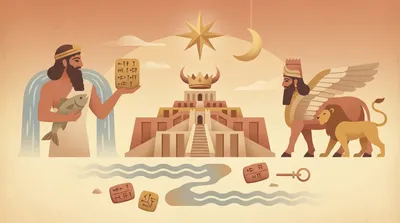
Gods and Myths of Mesopotamia
Journey through the gods, heroes, and monsters of ancient Mesopotamia - from Enlil and Inanna to the Epic of Gilgamesh. This mixed-difficulty quiz blends quick facts with deeper myth connections, so you can test what you know and learn what you missed along the way.
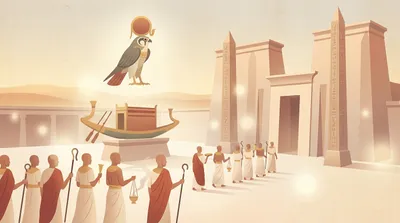
Egyptian Temples and Priesthood Roles
Step inside ancient Egypt’s sacred precincts and explore how temples worked day to day. This quiz covers priestly ranks, rituals, offerings, and the political economy behind major cult centers. Expect a mixed-difficulty set that rewards careful reading and solid historical context.
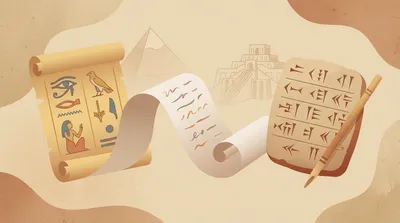
Hieroglyphs, Cuneiform, and Writing Systems
Trace how ancient people recorded language, power, and trade through signs and symbols. This quiz mixes Egyptian hieroglyphs with Mesopotamian cuneiform and other early writing systems, from materials and tools to how scripts evolved. Expect a blend of quick ID questions and deeper context checks.
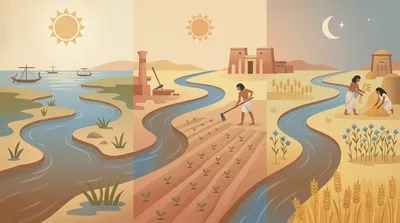
Nile Agriculture and Flood Calendar
Step into the rhythm of ancient Egypt by exploring how the Nile’s floods shaped farming, labor, and the yearly calendar. This mixed-difficulty quiz covers seasons, crops, tools, and administration tied to predictable inundation. Choose your preferred question count and difficulty, then answer each item with 4 options and no timer.
Ziggurats: architecture and civic function
Step into the monumental world of Mesopotamian ziggurats and learn how these tiered temples shaped city life. This mixed-difficulty quiz explores architecture, construction, patronage, and civic roles across Sumer, Akkad, Babylon, and Assyria. Choose your preferred question count and difficulty to study casually or challenge yourself.
Egyptian dynasties: Old, Middle, and New
Trace the rise and fall of Egypt’s Old, Middle, and New Kingdoms through rulers, reforms, wars, and cultural milestones. This mixed-difficulty quiz helps you connect dynasties to key events, monuments, and timelines. Choose your preferred question count and difficulty, then test your recall with 4-option questions and no timer.