Hieroglyphs, Cuneiform, and Writing Systems
Trace how ancient people recorded language, power, and trade through signs and symbols. This quiz mixes Egyptian hieroglyphs with Mesopotamian cuneiform and other early writing systems, from materials...
Start Quiz
Pick a difficulty and question count to begin.
About this quiz
What you’ll explore
From temple walls to clay tablets, these questions focus on how writing worked in practice - not just what it looked like. You’ll compare where scripts emerged, what they recorded, and how scribes learned their craft.
Each question is multiple-choice with 4 options and no timer, so you can slow down and reason through tricky details. Before you start, choose your preferred question count and difficulty to match a quick review or a longer mixed challenge.
Skills you’ll practice
- Distinguishing hieroglyphs, hieratic/demotic, and cuneiform by use and context
- Connecting scripts to materials (stone, papyrus, clay) and writing tools
- Recognizing common purposes: accounting, royal inscriptions, law, religion, letters
- Tracking how writing systems change over time and across regions
- Interpreting key terms (logograms, phonograms, determinatives, syllabaries)
Common pitfalls (and how to avoid them)
Many players mix up “script” with “language,” or assume every sign is an alphabet letter; this quiz regularly tests those distinctions. Another frequent slip is confusing where something was written (Egypt vs. Mesopotamia) with what it was written on (papyrus vs. clay).
How the difficulty stays balanced
Difficulty is mixed: easier items cover core definitions and famous examples, while harder ones probe chronology, administrative uses, and script-function nuances. The question set alternates recognition-style prompts with concept questions, keeping the challenge varied rather than steadily ramping upward.
Sample questions
What is the primary writing system used by ancient Egyptians?
- A.Hieroglyphs
- B.Cuneiform
- C.Latin
- D.Sumerian
Cuneiform was primarily used by which ancient civilization?
- A.Sumerians
- B.Egyptians
- C.Phoenicians
- D.Greeks
Which material was commonly used to write hieroglyphs in ancient Egypt?
- A.Papyrus
- B.Stone
- C.Wood
- D.Silk
Quiz FAQ
How many questions are in this quiz?
This quiz has 198 questions on hieroglyphs, cuneiform, and early writing systems.
Is the quiz timed?
No. Every question has 4 options and there is no timer, so you can answer at your own pace.
Can I choose the number of questions and difficulty?
Yes. Pick your preferred question count and difficulty before starting to tailor the session.
Does it focus only on Egypt and Mesopotamia?
The main emphasis is Egypt and Mesopotamia, with broader writing-system concepts included for comparison.
What mistakes does this quiz commonly test?
It often targets confusion between script vs. language, and mix-ups about materials like papyrus versus clay tablets.
Play this quiz in another language(7)
Related Quizzes
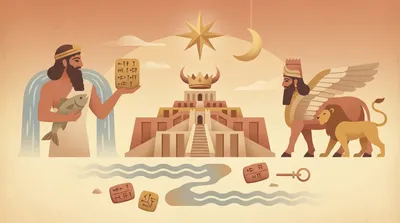
Gods and Myths of Mesopotamia
Journey through the gods, heroes, and monsters of ancient Mesopotamia - from Enlil and Inanna to the Epic of Gilgamesh. This mixed-difficulty quiz blends quick facts with deeper myth connections, so you can test what you know and learn what you missed along the way.
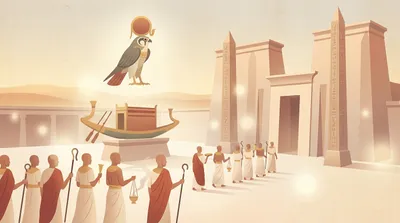
Egyptian Temples and Priesthood Roles
Step inside ancient Egypt’s sacred precincts and explore how temples worked day to day. This quiz covers priestly ranks, rituals, offerings, and the political economy behind major cult centers. Expect a mixed-difficulty set that rewards careful reading and solid historical context.
Akkadian Empire: Sargon and successors
Step into the world of the Akkadian Empire and track how Sargon built power - and how his successors tried to hold it together. This mixed-difficulty quiz explores key rulers, campaigns, administration, and the empire’s legacy across Mesopotamia. Choose your preferred length and difficulty, then test what you really remember.
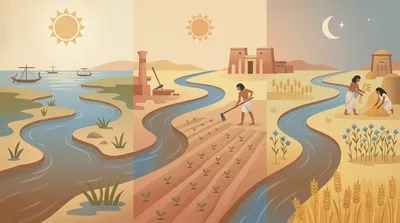
Nile Agriculture and Flood Calendar
Step into the rhythm of ancient Egypt by exploring how the Nile’s floods shaped farming, labor, and the yearly calendar. This mixed-difficulty quiz covers seasons, crops, tools, and administration tied to predictable inundation. Choose your preferred question count and difficulty, then answer each item with 4 options and no timer.
Ziggurats: architecture and civic function
Step into the monumental world of Mesopotamian ziggurats and learn how these tiered temples shaped city life. This mixed-difficulty quiz explores architecture, construction, patronage, and civic roles across Sumer, Akkad, Babylon, and Assyria. Choose your preferred question count and difficulty to study casually or challenge yourself.
Mesopotamian City-States and Empires
Travel through the rise of Mesopotamian city-states and the empires that followed, from Sumer and Akkad to Babylon and Assyria. This mixed-difficulty quiz checks your grasp of rulers, wars, laws, trade, religion, and key sites. Choose your preferred question count and difficulty, then answer at your own pace with no timer.