Byzantine art: mosaics, icons, and churches
Step into the world of Byzantine art through shimmering mosaics, sacred icons, and monumental church design. This mixed-difficulty quiz covers key sites, styles, symbolism, and historical context from...
Start Quiz
Pick a difficulty and question count to begin.
About this quiz
What you’ll explore
Byzantine art blends theology, politics, and craftsmanship - this quiz helps you connect images and buildings to their purposes and periods. Expect questions on mosaics, panel icons, church plans, patrons, and the visual language of holiness.
Each question has 4 options and there’s no timer, so you can think through details like materials, inscriptions, and iconographic clues. Before you start, pick how many questions you want to answer and set the difficulty to match your comfort level.
Skills you’ll practice
You’ll sharpen recognition of common subjects (Christ Pantocrator, Theotokos, saints), typical settings (domes, apses, narthexes), and how style shifts between regions and centuries. You’ll also practice matching famous monuments to their locations and historical moments.
Common pitfalls to avoid
Many players mix up architectural terms (basilica vs. cross-in-square) or assume every gold background belongs to the same era. Another frequent slip is confusing later Orthodox icon conventions with earlier imperial mosaic programs.
How the difficulty stays balanced
Because the difficulty is mixed, easier questions focus on big ideas and well-known monuments, while harder ones zoom in on terminology, lesser-known sites, and nuanced iconography. Adjusting difficulty changes how often those deep-cut questions appear, and choosing a shorter question count makes the session lighter and more focused.
- Identify hallmark features of Byzantine mosaics, icons, and church interiors
- Practice key vocabulary: apse, narthex, dome, tesserae, iconostasis
- Distinguish major periods, including Iconoclasm and post-Iconoclasm revival
- Avoid look-alike traps between Byzantine, Roman, and later medieval styles
- Learn to link monuments to place and patronage (court, clergy, monasteries)
- Improve recall through repeat play without time pressure
Sample questions
What is the primary material used in Byzantine mosaics?
- A.Glass tesserae
- B.Wood
- C.Metal plates
- D.Paint
Which of the following is a famous example of Byzantine architecture?
- A.Hagia Sophia
- B.Colosseum
- C.Parthenon
- D.St. Peter's Basilica
What is the typical theme of Byzantine iconography?
- A.Religious figures
- B.Landscape scenes
- C.Abstract patterns
- D.Historical events
Quiz FAQ
How many questions are in this quiz?
This quiz has 194 questions covering mosaics, icons, churches, and related Byzantine art history.
What format does the quiz use?
Each question is multiple-choice with 4 options, and there is no timer.
Can I change the difficulty or number of questions?
Yes. Choose your preferred question count and set the difficulty before starting to tailor the session.
What topics are included besides mosaics and icons?
You’ll also see church architecture, terminology, iconography, major monuments, and historical context like Iconoclasm.
Why do some questions feel much harder than others?
The quiz is mixed difficulty, so it combines foundational concepts with detailed terms and less-famous examples.
Play this quiz in another language(7)
Related Quizzes
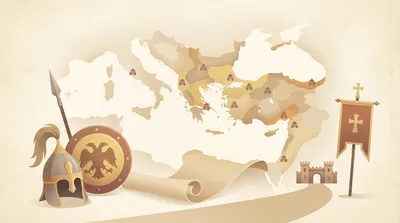
Themes, Tagmata, and Byzantine Army
Test how well you know the military-administrative system of the Byzantine Empire, from Themes and Tagmata to recruitment and command. Questions range from basic definitions to deeper details about reforms, units, and strategy. Choose your preferred difficulty and question count, then play at your own pace with no timer.
The Great Schism: causes and aftermath
Trace how theological disputes, political rivalry, and cultural friction split Eastern and Western Christianity. This quiz explores the lead-up to 1054, the key figures and flashpoints, and the long-term consequences for Byzantium and Latin Europe. Expect a mixed set that moves from core facts to deeper context.
Themes: provinces, taxes, and governors
Step into the administrative world of the Byzantine Empire and test what you know about themes, provincial governance, and taxation. Questions range from basic definitions to tricky distinctions between offices and fiscal terms. Choose how many questions you want and set the difficulty that fits your study goals - then play at your own pace.
Court ceremony: titles, rituals, and power
Step into the world of Byzantine court ceremony, where titles, rituals, and protocol shaped real political power. This quiz explores offices, rankings, public processions, and the symbolism of dress and space. Expect a mix of straightforward identifications and deeper context questions across the empire’s changing traditions.
Constantinople: walls, sieges, and survival
Test your knowledge of Constantinople’s defenses, famous sieges, and the city’s long fight for survival. From the Theodosian Walls to naval blockades and last-ditch diplomacy, this mixed-difficulty quiz spans centuries of Byzantine strategy and resilience. Choose your preferred question count and difficulty, then play at your own pace.
Justinian’s Reforms and Reconquests
Test your knowledge of Emperor Justinian I’s ambitious reign - from sweeping legal reforms to bold campaigns to restore Roman territory. Explore the Corpus Juris Civilis, court politics, and key reconquests in Italy, Africa, and beyond. With mixed difficulty, this quiz suits both newcomers and Byzantine history fans.