Fasteners: screws, nails, and anchors
Test your know-how on fasteners - from wood screws and finish nails to drywall anchors and masonry fixings. You’ll identify the right type, size, and application for common jobs, while spotting mistak...
Start Quiz
Pick a difficulty and question count to begin.
About this quiz
What you’ll practice
Fasteners look simple until you need the right thread, shank, head, and anchor type for the material in front of you. This quiz helps you build practical judgment for everyday DIY and jobsite scenarios.
Each question uses 4 options and there’s no timer, so you can think through load, substrate, and tool choice without pressure.
Difficulty and quiz setup
Difficulty is mixed on purpose: straightforward identification questions are balanced with application-based choices (like selecting anchors for hollow drywall vs. solid masonry). You can also choose your question count and difficulty before starting to match a quick refresher or a deeper practice session.
Common pitfalls to avoid
Many fastener failures come from small mismatches - wrong pilot hole, wrong anchor for the wall type, or using a fastener that can’t handle shear or pull-out forces. The questions highlight these “looks right but fails later” moments.
- Mixing up wood, sheet-metal, and machine screw threads
- Choosing the wrong anchor for hollow vs. solid substrates
- Ignoring pilot holes and causing splits or stripped heads
- Misjudging length/penetration and ending up with weak bite
- Over- or under-driving nails/screws and damaging the material
Tips for better scores
Read for clues about the material (softwood, hardwood, drywall, brick, concrete) and the load direction (shear vs. pull-out). When in doubt, prioritize correct substrate compatibility first, then size and corrosion resistance for the environment.
Sample questions
What type of fastener is typically used to join two pieces of wood together?
- A.Screw
- B.Anchor
- C.Bolt
- D.Nut
Which fastener is commonly used for hanging items on walls?
- A.Nail
- B.Screw
- C.Rod
- D.Clip
What material is commonly used for screws in outdoor applications due to its corrosion resistance?
- A.Stainless steel
- B.Plastic
- C.Copper
- D.Aluminum
Quiz FAQ
How many questions are in this quiz?
This quiz has 123 questions covering screws, nails, and anchors across common materials and use cases.
Is there a timer or time limit?
No - there’s no timer. Each question has 4 options, so you can answer at your own pace.
Can I choose the number of questions and difficulty?
Yes. You can select your preferred question count and difficulty before you start to fit quick practice or a longer session.
What skills will I improve with this fasteners quiz?
You’ll practice selecting the right fastener for the substrate, estimating size/length, and avoiding common failure causes like stripping, splitting, or poor anchoring.
What mistakes does the quiz focus on most?
It often targets mix-ups like wrong thread type, incorrect anchor choice for hollow walls, and poor installation habits such as skipping pilot holes or over-driving.
Play this quiz in another language(7)
Related Quizzes
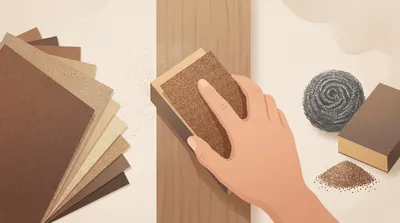
Abrasives: sandpaper grits and materials
Match the right abrasive to the job by mastering sandpaper grit ranges, backing types, and common abrasive minerals. This mixed-difficulty quiz helps you choose between paper, cloth, film, and mesh, and avoid finish-ruining mistakes. Pick your question count and difficulty, then answer each item with 4 options and no timer.
Hand tool types and best uses
Build confidence choosing the right hand tool for the job - from cutting and shaping to fastening and measuring. This mixed-difficulty quiz focuses on tool types, key features, and best-use scenarios you’ll meet in DIY, workshop, and jobsite tasks. Pick your preferred question count and difficulty, then learn by spotting what each tool is designed to do.
What happens next in scenes?
Think you can predict the next beat in a family-movie scene? This quiz drops you into familiar moments and asks what happens next, based on context clues, character habits, and classic storytelling. Pick your answer and see how well you remember the setup-to-payoff rhythm.

Brain lobes and core functions
Map the brain’s major lobes to what they do in everyday thinking and behavior. This mixed-difficulty quiz checks your grasp of frontal, parietal, temporal, and occipital functions, plus key “core” structures. Each question uses 4 options and there’s no timer, so you can focus on accuracy.

Guess the song from emoji clues
Decode emoji riddles into real songs in this playful music challenge. Each clue hints at a title, lyric, or artist reference - your job is to connect the icons to the track. With a mixed difficulty set, you’ll see both instant classics and trickier brain-teasers.

Guess the song from one lyric
Can you name the track from a single lyric? This mixed-difficulty quiz spans classics, pop hits, rock anthems, and modern chart-toppers, all with just one line to go on. Pick your preferred question count and difficulty, then see how many songs you can recognize on sight.