Intro to fractions: halves, thirds, and fourths
Build a strong start with fractions by working with halves, thirds, and fourths. You’ll practice reading, comparing, and matching simple fractions to pictures and real-life examples. Choose how many q...
Start Quiz
Pick a difficulty and question count to begin.
About this quiz
What you’ll learn and practice
Fractions make more sense when you can connect the number to a part of a whole. This quiz focuses on halves, thirds, and fourths using clear, beginner-friendly questions.
Each question is multiple-choice with 4 options and no timer, so you can slow down, visualize, and choose confidently.
Difficulty and question settings
Difficulty is mixed to keep things balanced: you’ll see easy identification questions alongside a few that require comparing or spotting equivalent parts. You can also choose your question count and difficulty before you start, making it great for quick practice or a longer review.
Common pitfalls to avoid
Many mistakes come from mixing up the top and bottom numbers or assuming a “bigger bottom number” means a bigger fraction. Watch for what the denominator represents (how many equal parts) and what the numerator counts (how many parts you have).
- Confusing numerator and denominator when reading a fraction
- Thinking 1/4 is larger than 1/3 because 4 is larger than 3
- Forgetting parts must be equal-sized to represent a fraction correctly
- Mixing up “one of four parts” (1/4) with “four parts” (4/1)
- Rushing picture questions without counting equal sections carefully
Tips to improve quickly
When you’re unsure, draw a simple shape and split it into equal parts, then shade the fraction. Repeating a few short sessions and gradually increasing difficulty is often more effective than doing everything in one go.
Sample questions
What fraction represents one half?
- A.1/2
- B.1/3
- C.1/4
- D.1/5
Which of the following is one third?
- A.1/3
- B.1/2
- C.1/4
- D.2/3
What fraction is equal to one fourth?
- A.1/4
- B.1/2
- C.1/3
- D.2/4
Quiz FAQ
How many questions are in this quiz?
This quiz has 114 questions on halves, thirds, and fourths.
What fraction topics does this cover?
You’ll practice identifying, reading, and comparing simple fractions like 1/2, 1/3, and 1/4, often with visual models.
Is there a timer?
No. The quiz has no timer, so you can take your time on each question.
What is the quiz format?
Every question is multiple-choice with 4 options, and you choose the best answer.
Can I choose the number of questions and difficulty?
Yes. You can select a question count and a difficulty level before starting, and the overall set is mixed for balanced practice.
Play this quiz in another language(7)
Related Quizzes
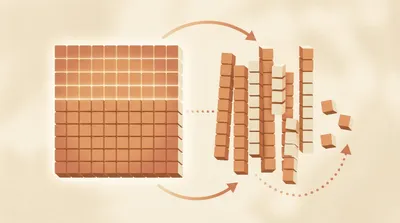
Place value with tens and hundreds
Build confidence with place value in the tens and hundreds. You’ll read, compare, and break apart numbers to see what each digit really means. Great for students who want extra practice or a quick refresher before classwork.
Add and subtract within 1,000
Build confidence with addition and subtraction up to 1,000 using place value strategies and smart regrouping. You’ll see a mix of straightforward and multi-step problems designed to strengthen accuracy and mental math. Pick your preferred question count and difficulty, then practice at your own pace.
What happens next in scenes?
Think you can predict the next beat in a family-movie scene? This quiz drops you into familiar moments and asks what happens next, based on context clues, character habits, and classic storytelling. Pick your answer and see how well you remember the setup-to-payoff rhythm.

Brain lobes and core functions
Map the brain’s major lobes to what they do in everyday thinking and behavior. This mixed-difficulty quiz checks your grasp of frontal, parietal, temporal, and occipital functions, plus key “core” structures. Each question uses 4 options and there’s no timer, so you can focus on accuracy.
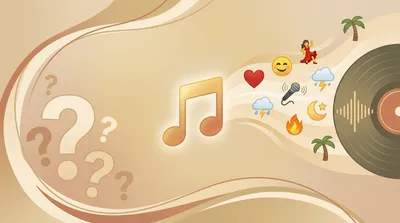
Guess the song from emoji clues
Decode emoji riddles into real songs in this playful music challenge. Each clue hints at a title, lyric, or artist reference - your job is to connect the icons to the track. With a mixed difficulty set, you’ll see both instant classics and trickier brain-teasers.
Guess the song from one lyric
Can you name the track from a single lyric? This mixed-difficulty quiz spans classics, pop hits, rock anthems, and modern chart-toppers, all with just one line to go on. Pick your preferred question count and difficulty, then see how many songs you can recognize on sight.