Stone Age migrations and peopling routes
Trace how early humans spread across continents, coastlines, and corridors during the Stone Age. This quiz explores key migration routes, climate pressures, and the evidence archaeologists use to map ...
Start Quiz
Pick a difficulty and question count to begin.
About this quiz
What this quiz covers
From Africa’s dispersals to coastal “highways” and inland corridors, these questions focus on the routes and constraints that shaped Stone Age peopling. You’ll work with timelines, geography, and the kinds of evidence used to infer movement.
Each question has 4 options and there’s no timer, so you can think through maps, climates, and plausible pathways without rushing.
Skills you’ll practice
You’ll practice linking environmental change (ice sheets, sea levels, deserts) to migration opportunities, and matching regions with likely entry routes and settlement sequences. The quiz also reinforces how archaeologists and geneticists build arguments from incomplete records.
Common pitfalls to avoid
Many mistakes come from mixing up similar-sounding corridors, assuming modern coastlines match ancient ones, or treating one line of evidence as definitive. Watch for date ranges, shifting land bridges, and the difference between “earliest evidence found” and “first arrival.”
Difficulty and settings
Difficulty is mixed on purpose: straightforward route ID questions sit alongside tougher items about competing models and ambiguous evidence. You can choose the number of questions and your preferred difficulty before starting, making it easy to run a short drill or a full 144-question session.
- Identify major dispersal routes (coastal, inland, and land-bridge crossings)
- Connect climate events to openings/closures of corridors
- Distinguish archaeological vs genetic vs linguistic clues (and their limits)
- Avoid timeline traps by checking ranges and uncertainty wording
- Practice regional geography: chokepoints, refugia, and stepping-stone islands
- Build confidence by mixing quick wins with deeper reasoning questions
Sample questions
Which period is characterized by the earliest known use of stone tools?
- A.Paleolithic
- B.Mesolithic
- C.Neolithic
- D.Copper Age
What is the primary material used by humans during the Paleolithic period?
- A.Stone
- B.Bronze
- C.Iron
- D.Wood
Which archaeological site is known for its well-preserved Paleolithic cave paintings?
- A.Lascaux
- B.Stonehenge
- C.Göbekli Tepe
- D.Catalhoyuk
Quiz FAQ
How many questions are in this quiz?
This quiz has 144 questions on Stone Age migrations and peopling routes.
Is there a timer?
No. Every question is untimed, so you can take as long as you need.
How many answer choices does each question have?
Each question comes with 4 options, with one best answer.
Can I choose the difficulty or number of questions?
Yes. Pick your preferred difficulty and question count before you start the quiz.
What makes the difficulty mixed?
It blends basic route and geography checks with harder questions about dating uncertainty and competing migration models.
Play this quiz in another language(7)
Related Quizzes
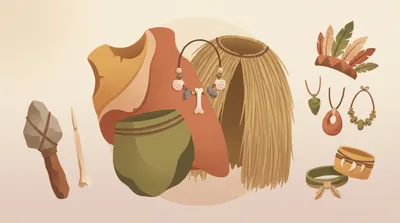
Stone Age clothing and personal adornment
Explore how Stone Age people dressed, stayed warm, and expressed identity through adornment. This mixed-difficulty quiz covers materials, tools, techniques, and what archaeologists can infer from finds. Choose your preferred question count and difficulty, then answer at your own pace with 4 options and no timer.

Paleolithic tool types and uses
Identify Paleolithic tool types and match them to what early humans actually did with them. You’ll work through cores, flakes, handaxes, points, scrapers, and burins while spotting key diagnostic features. Great for archaeology students, museum fans, or anyone curious about Stone Age technology.

Stone Age shelters and settlement patterns
Explore how Stone Age people built shelters and chose places to live, from caves and rock overhangs to huts and early camps. This mixed-difficulty quiz connects materials, climate, mobility, and resources to real settlement patterns. Pick your preferred question count and difficulty, then answer each multiple-choice question at your own pace.

Stone Age timelines: periods and dates
Pin down the Stone Age timeline with confidence, from the earliest toolmakers to the dawn of farming. This quiz mixes quick date checks with broader period-order questions to help you remember what came first and roughly when. Choose your preferred question count and difficulty, then learn as you go with instant feedback.

Fire, cooking, and daily technology
Step into Stone Age life and see how fire transformed cooking, tools, and everyday problem-solving. This mixed-difficulty quiz explores hearth skills, early “tech,” and the practical choices people made to survive. Pick your question count and difficulty, then answer at your own pace.

Neolithic farming: crops and animals
Test how well you know the plants and animals that transformed human life in the Neolithic. From early cereals to herded livestock, this quiz covers key domestications, regions, and farming practices. Choose your preferred question count and difficulty, then learn as you go with clear 4-option questions and no timer.