True or false: space myths
Test your space knowledge by sorting fact from fiction in this True or False challenge. From planets and stars to astronauts and black holes, you’ll face popular “space myths” and real science side by...
Start Quiz
Pick a difficulty and question count to begin.
About this quiz
What you’ll practice
This quiz sharpens your ability to judge common space claims using basic astronomy and physics ideas. You’ll learn to recognize misleading wording and separate movie logic from real-world evidence.
Each question is True/False in a 4-option multiple-choice format, and there’s no timer - take your time and think it through.
Difficulty and question settings
Difficulty is mixed on purpose: easier items cover well-known facts (like gravity and the Moon), while tougher ones lean on less-intuitive topics (like vacuum behavior, orbits, and radiation). Choose how many questions you want to play and select a difficulty level to keep the session quick, steady, or more challenging.
- Watch for absolute words like “always” or “never,” which often signal a myth
- Don’t confuse “no gravity in space” with “microgravity in orbit”
- Remember that sound needs a medium - space is (mostly) a vacuum
- Separate “weightless” from “massless” when judging astronaut claims
- Be careful with scale: distances, sizes, and temperatures are easy to misjudge
Common pitfalls (and how to avoid them)
Many myths sound plausible because they mix one true detail with a wrong conclusion; focus on the full statement, not just a familiar keyword. If you’re unsure, think in terms of cause and effect (gravity, motion, pressure, heat transfer) rather than trivia.
Tips to improve your score
Replay with a different difficulty setting and compare which topics trip you up most. Reviewing explanations you already know can also help you spot trick phrasing faster on the next run.
Sample questions
The Great Wall of China is visible from the Moon.
- A.False
- B.True
- C.Only during the day
- D.Only with a telescope
Humans can breathe in space without any equipment.
- A.False
- B.True
- C.Only in low gravity
- D.Only for a few seconds
Venus is the hottest planet in the Solar System.
- A.True
- B.False
- C.Mars is hotter
- D.Mercury is hotter
Quiz FAQ
How many questions are in this quiz?
This quiz has 104 questions focused on true-or-false style space myths and facts.
What format are the questions in?
Each question is multiple-choice with 4 options, and there is no timer.
Is the difficulty always the same?
No. The quiz is mixed difficulty, combining straightforward facts with trickier myth-busting statements.
Can I choose fewer questions to play?
Yes. You can select your preferred question count before starting to make the session shorter or longer.
What topics do the space myths cover?
Expect a mix of planets, stars, the Moon, astronauts, gravity, orbits, and space environment basics.
Related Quizzes

True or false: language and words
Put your language instincts to the test with quick true-or-false statements about words, meanings, and how English works. You’ll see a mix of easy wins and tricky claims that hinge on tiny details. Choose your preferred length and difficulty, then see how sharp your linguistic intuition really is.
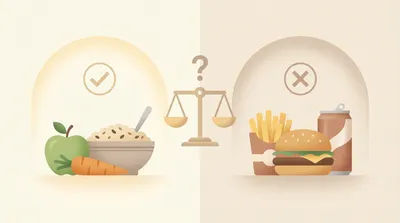
True or false: food and nutrition facts
Test your food and nutrition knowledge with quick true-or-false style statements that cover labels, nutrients, and everyday diet myths. The set mixes easy wins with trickier science-based facts, so you can learn as you play. Choose your preferred question count and difficulty, then see how many you can get right in a row.

What happens next in scenes?
Think you can predict the next beat in a family-movie scene? This quiz drops you into familiar moments and asks what happens next, based on context clues, character habits, and classic storytelling. Pick your answer and see how well you remember the setup-to-payoff rhythm.

Brain lobes and core functions
Map the brain’s major lobes to what they do in everyday thinking and behavior. This mixed-difficulty quiz checks your grasp of frontal, parietal, temporal, and occipital functions, plus key “core” structures. Each question uses 4 options and there’s no timer, so you can focus on accuracy.
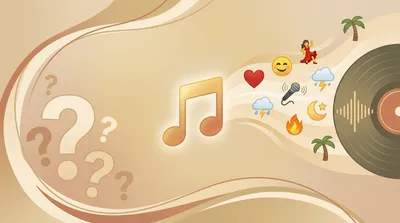
Guess the song from emoji clues
Decode emoji riddles into real songs in this playful music challenge. Each clue hints at a title, lyric, or artist reference - your job is to connect the icons to the track. With a mixed difficulty set, you’ll see both instant classics and trickier brain-teasers.

Guess the song from one lyric
Can you name the track from a single lyric? This mixed-difficulty quiz spans classics, pop hits, rock anthems, and modern chart-toppers, all with just one line to go on. Pick your preferred question count and difficulty, then see how many songs you can recognize on sight.