Energy
Explore the basics of energy in engineering: how it’s stored, transferred, and converted in real systems. These quizzes cover key ideas like work, power, efficiency, and energy conservation, with practical examples drawn from machines and everyday technology.
Quizzes


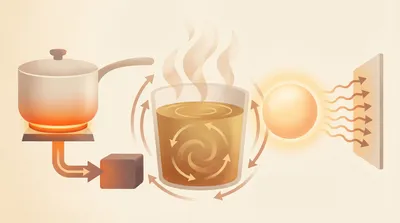
What you'll find here
- Curated quizzes focused on Energy
- Difficulty spread from easy to hard
- Randomized questions with instant feedback
- Quizzes you can replay and compare on the leaderboard
Category FAQ
How many quizzes are available?
There are 3 quizzes with 354 questions total.
Do these Energy quizzes have a timer?
No. Each question is untimed so you can work carefully through concepts, units, and calculations.
How are the questions formatted?
Every question is multiple-choice with 4 options, designed to test both definitions and applied understanding.
What topics are covered in the Energy category?
You’ll see energy forms, work and power, efficiency, conservation of energy, and common units like joules, watts, and kWh.
Are there different difficulty levels or quiz lengths?
Yes. The 3 quizzes vary in length and difficulty, letting you start with basics and progress to more involved problems.
More to explore
What you’ll practice
These Energy quizzes focus on core concepts used to explain how devices and systems work, from lifting loads to generating electricity. You’ll practice reading simple scenarios, choosing the correct concept, and applying formulas and units accurately.
How the quizzes work
Each question has 4 answer options and there’s no timer, so you can think through conversions and relationships at your own pace. Quiz length and difficulty vary across the set, so you can start with fundamentals and move toward more multi-step applications.
Key ideas you’ll see
- Energy forms and conversions (kinetic, potential, thermal, electrical)
- Work, power, and efficiency in machines
- Conservation of energy and energy transfer pathways
- Units and conversions (J, W, kWh) and interpreting magnitudes
- Real-world examples: engines, generators, batteries, and heat loss
Quick context and interesting facts
The joule is named after James Prescott Joule, whose experiments helped establish that heat and mechanical work are equivalent forms of energy. In everyday life, electricity bills are often measured in kilowatt-hours, a unit of energy (not power) that reflects how much power you use over time.