Greek fire and Byzantine naval power
Command the seas of the medieval Mediterranean with this quiz on Greek fire and Byzantine naval power. Explore how the empire defended Constantinople, organized fleets, and used technology, tactics, a...
Start Quiz
Pick a difficulty and question count to begin.
About this quiz
What this quiz covers
Greek fire wasn’t just a weapon - it was part of a wider naval system that included ship design, command structure, coastal defenses, and strategy. This quiz connects the famous incendiary to the realities of Byzantine sea power, from the Aegean to the Bosporus.
You’ll see questions ranging from big-picture history (wars, rivals, and turning points) to practical details like fleet roles, maritime logistics, and how naval victories shaped imperial survival.
Format and difficulty settings
Each question has 4 options and there’s no timer, so you can think through sources, terminology, and context without rushing. Before you start, choose your question count and difficulty to match your goal - short practice runs, or a long session that mirrors the full scope.
Difficulty is mixed by design: easier items test core terms and famous episodes, while harder ones dig into less-quoted campaigns, administrative titles, and nuanced cause-and-effect.
Skills you’ll practice (and common pitfalls)
- Separating legend from evidence when discussing Greek fire’s composition and deployment
- Linking naval tactics to geography (straits, harbors, winds, and coastal choke points)
- Recognizing key Byzantine institutions, ranks, and fleet organization terms
- Avoiding timeline traps by distinguishing similar wars, emperors, and recurring enemies
- Not overgeneralizing from a single siege or battle to “Byzantine naval power” as a whole
Tips for better scores
When two answers look plausible, anchor your choice to a specific context: who is fighting, where the fleet operates, and what the empire’s strategic need is at that moment. If you miss a question, replay a smaller set on the same difficulty to lock in names and sequences before moving back to mixed mode.
Sample questions
What was Greek fire primarily used for?
- A.Naval warfare
- B.Land artillery
- C.Chemical warfare
- D.Siege engines
What was the primary advantage of Greek fire over regular fire?
- A.It could burn on water
- B.It was invisible
- C.It could not be extinguished
- D.It exploded on contact
Who is reputed to have invented Greek fire?
- A.Callinicus of Heliopolis
- B.Heron of Alexandria
- C.Archimedes
- D.Leonidas of Sparta
Quiz FAQ
How many questions are in this quiz?
This quiz has 193 questions on Greek fire and Byzantine naval power.
Is there a timer or speed requirement?
No. The quiz has no timer, so you can answer at your own pace.
How does the answer format work?
Every question is multiple-choice with 4 options, and you select the best answer.
Can I choose the number of questions and difficulty?
Yes. You can adjust question count and pick a difficulty level before starting.
What are common mistakes players make on this topic?
Many confuse similar emperors and wars, or treat Greek fire myths as confirmed facts instead of separating evidence from later stories.
Play this quiz in another language(7)
Related Quizzes
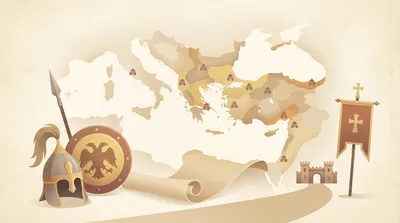
Themes, Tagmata, and Byzantine Army
Test how well you know the military-administrative system of the Byzantine Empire, from Themes and Tagmata to recruitment and command. Questions range from basic definitions to deeper details about reforms, units, and strategy. Choose your preferred difficulty and question count, then play at your own pace with no timer.

The Great Schism: causes and aftermath
Trace how theological disputes, political rivalry, and cultural friction split Eastern and Western Christianity. This quiz explores the lead-up to 1054, the key figures and flashpoints, and the long-term consequences for Byzantium and Latin Europe. Expect a mixed set that moves from core facts to deeper context.
Byzantine art: mosaics, icons, and churches
Step into the world of Byzantine art through shimmering mosaics, sacred icons, and monumental church design. This mixed-difficulty quiz covers key sites, styles, symbolism, and historical context from late antiquity through the empire’s later centuries. Choose your preferred question count and difficulty, then test what you know with calm, no-timer play.

Themes: provinces, taxes, and governors
Step into the administrative world of the Byzantine Empire and test what you know about themes, provincial governance, and taxation. Questions range from basic definitions to tricky distinctions between offices and fiscal terms. Choose how many questions you want and set the difficulty that fits your study goals - then play at your own pace.
Court ceremony: titles, rituals, and power
Step into the world of Byzantine court ceremony, where titles, rituals, and protocol shaped real political power. This quiz explores offices, rankings, public processions, and the symbolism of dress and space. Expect a mix of straightforward identifications and deeper context questions across the empire’s changing traditions.
Constantinople: walls, sieges, and survival
Test your knowledge of Constantinople’s defenses, famous sieges, and the city’s long fight for survival. From the Theodosian Walls to naval blockades and last-ditch diplomacy, this mixed-difficulty quiz spans centuries of Byzantine strategy and resilience. Choose your preferred question count and difficulty, then play at your own pace.