Genetics
Explore the core ideas of genetics, from DNA and genes to inheritance patterns and variation. These quizzes help you review key terms, interpret simple genetic scenarios, and connect molecular processes to traits and evolution.
Quizzes
What you'll find here
- Curated quizzes focused on Genetics
- Difficulty spread from easy to hard
- Randomized questions with instant feedback
- Quizzes you can replay and compare on the leaderboard
See this category in other languages
Category FAQ
How many quizzes are available in Genetics?
There are 3 quizzes with 394 questions total.
What topics do the Genetics quizzes cover?
They cover DNA and genes, inheritance patterns, gene expression basics, mutations, and key genetics terminology.
How are the Genetics quiz questions formatted?
Each question is multiple-choice with 4 options, and there is no timer.
Are the Genetics quizzes suitable for different skill levels?
Yes. The 3 quizzes vary in difficulty and length, so you can start with basics and move to broader review sets.
Do I need advanced math for these Genetics quizzes?
No advanced math is required; most questions focus on concepts and simple inheritance reasoning.
More to explore
What you’ll practice in Genetics
These Genetics quizzes focus on how traits are encoded, passed on, and expressed, including vocabulary and common problem types used in biology courses.
You’ll practice reading genetics statements, linking genotype to phenotype, and recognizing how mutations and recombination affect variation.
How the quizzes work
Each quiz uses multiple-choice questions with 4 options and no timer, so you can think through each step and learn from mistakes.
Difficulty and length vary across the 3 quizzes, with a mix of quick checks and longer sets that cover broader portions of the topic.
Quick genetics context
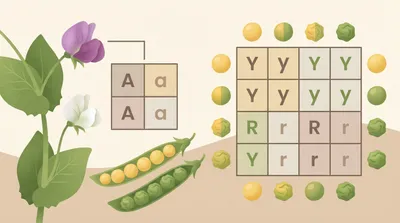
Modern genetics grew from Mendel’s pea plant experiments, but it expanded rapidly once DNA was identified as the hereditary material and the double-helix structure explained how genetic information can be copied.
What you’ll see in questions
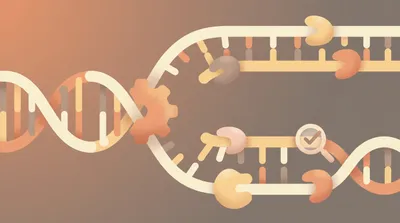
- DNA structure and replication basics
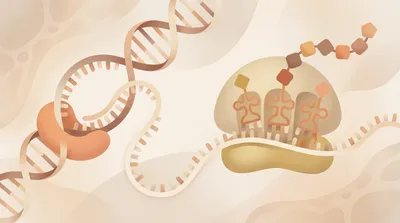
- Gene expression (transcription and translation) concepts
- Mendelian inheritance and simple crosses
- Mutations, alleles, and genetic variation
- Core terminology (genotype, phenotype, locus)
- Interpreting straightforward genetics scenarios and outcomes