Mendelian inheritance: monohybrid and dihybrid crosses
Test your genetics fundamentals with monohybrid and dihybrid crosses, from simple dominance to classic Mendelian ratios. Work through Punnett squares, genotype/phenotype predictions, and probability q...
Start Quiz
Pick a difficulty and question count to begin.
About this quiz
What you’ll practice
Sharpen your ability to solve monohybrid and dihybrid crosses using Punnett squares, probability rules, and Mendel’s laws. You’ll translate word problems into allele notation, then predict genotype and phenotype ratios with confidence.
Each question has 4 options and there’s no timer, so you can slow down to check ratios or speed-run for exam-style practice. Before you start, choose how many questions you want to answer and select a difficulty level to match your current comfort.
Common pitfalls to avoid
Many mistakes come from mixing up genotype vs phenotype ratios, or forgetting to apply the product and sum rules correctly in multi-step probability. Another frequent slip is losing track of heterozygous parents or assuming traits assort together when the question implies independent assortment.
- Convert the prompt into clear allele symbols before building a Punnett square
- Double-check whether the question asks for genotype ratio, phenotype ratio, or a single probability
- Watch for testcross cues (unknown genotype crossed with homozygous recessive)
- For dihybrids, confirm you’re forming correct gametes (FOIL-style) before combining
- Reduce ratios properly and keep totals consistent (e.g., out of 4, 16, or 100%)
How the difficulty is balanced
Difficulty is mixed on purpose: you’ll see quick ratio recognition alongside problems that require multi-step reasoning, conditional probability, or interpreting crosses from outcomes. This blend helps you build speed on the basics while still practicing the kinds of twists that show up on biology exams.
Sample questions
In a monohybrid cross, what is the expected phenotypic ratio of the offspring?
- A.3:1
- B.1:1
- C.2:1
- D.9:1
Which scientist is known as the father of genetics?
- A.Gregor Mendel
- B.Charles Darwin
- C.Louis Pasteur
- D.James Watson
What type of allele is expressed when present in a genotype?
- A.Dominant
- B.Recessive
- C.Codominant
- D.Incomplete dominant
Quiz FAQ
How many questions are in this quiz?
This quiz has 102 questions on Mendelian inheritance, including monohybrid and dihybrid crosses.
Is the quiz timed?
No. There’s no timer, so you can take your time working through Punnett squares and probabilities.
What answer format does the quiz use?
Each question is multiple-choice with 4 options, designed for quick checking and focused practice.
Can I choose the number of questions and difficulty?
Yes. Pick your preferred question count before starting and select a difficulty level to match your study goal.
What topics are covered besides Punnett squares?
You’ll also practice Mendel’s laws, genotype vs phenotype ratios, testcross logic, and probability in crosses.
Play this quiz in another language(7)
Related Quizzes
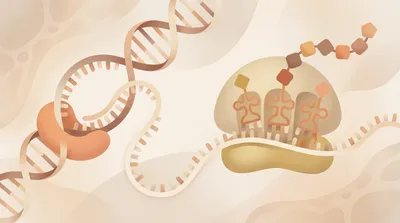
Gene expression: transcription and translation basics
Test your understanding of how cells turn DNA instructions into functional proteins. This quiz covers the core steps of transcription and translation, key molecules involved, and classic gene-expression terminology. Expect a mixed set of questions that builds from fundamentals to common exam-style scenarios.
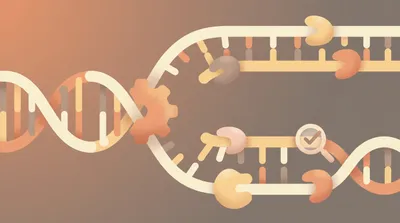
DNA replication: enzymes and proofreading
Test your understanding of DNA replication with a focus on the enzymes that drive the process and the proofreading that keeps genomes accurate. You’ll cover helicase, primase, DNA polymerases, ligase, topoisomerases, sliding clamps, and mismatch repair. Mixed difficulty makes it useful for quick revision or deeper practice.
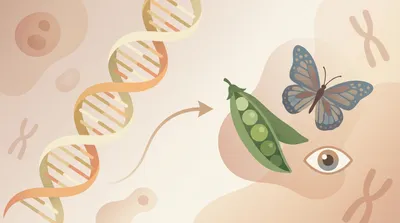
Genetics Basics: Genes To Traits
Explore how traits are inherited through genes and alleles. Covers Mendelian inheritance, dominant/recessive patterns, and simple Punnett-square reasoning.
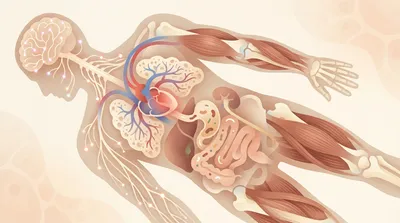
Human Body Systems And Functions
Test your knowledge of major human body systems and what they do. Covers organs, system interactions, and basic physiology terms.
Physics: Forces Motion And Energy
Test core physics concepts behind everyday motion. Covers Newton’s laws, friction, work and energy, momentum, and simple conceptual scenarios.

Astronomy: Stars Planets And Galaxies
Check your understanding of objects and processes in space. Covers star life cycles, planet types, galaxies, and basic observational astronomy terms.