DNA replication: enzymes and proofreading
Test your understanding of DNA replication with a focus on the enzymes that drive the process and the proofreading that keeps genomes accurate. You’ll cover helicase, primase, DNA polymerases, ligase,...
Start Quiz
Pick a difficulty and question count to begin.
About this quiz
What you’ll practice
Sharpen your genetics fundamentals by identifying which enzyme does what at each stage of replication, and by explaining how fidelity is maintained through proofreading and repair.
Expect questions that connect concepts (leading vs lagging strand, Okazaki fragments, clamp loading, exonuclease activity) rather than isolated definitions.
Quiz format and difficulty
Every question has 4 options and there’s no timer, so you can reason through mechanisms without rushing.
Choose your preferred question count and a difficulty setting before you start; the “Mixed” balance blends easier recall items with scenario-style questions that test application.
Common pitfalls to avoid
Many mistakes come from mixing up similar-sounding roles (e.g., primase vs polymerase, ligase vs topoisomerase) or confusing proofreading with mismatch repair.
Pay close attention to directionality (5′→3′ synthesis), which strand is continuous, and when RNA primers are removed and replaced.
Tips for scoring higher
- Match each enzyme to its specific job (unwinding, priming, extending, sealing, relieving supercoils)
- Track strand direction and where Okazaki fragments form
- Separate proofreading (3′→5′ exonuclease) from post-replication mismatch repair
- Watch for prokaryote vs eukaryote differences in polymerases and accessory proteins
- Use process-of-elimination on close options by checking timing and location in the fork
Sample questions
What is the primary enzyme responsible for DNA synthesis during replication?
- A.DNA polymerase
- B.RNA polymerase
- C.Ligase
- D.Helicase
What is the function of DNA ligase in DNA replication?
- A.To join Okazaki fragments
- B.To unwind the DNA helix
- C.To add RNA primers
- D.To proofread DNA
Which enzyme is responsible for unwinding the DNA double helix?
- A.Helicase
- B.Polymerase
- C.Primase
- D.Ligase
Quiz FAQ
How many questions are in this quiz?
This quiz has 175 questions on DNA replication enzymes, proofreading, and repair.
Is there a time limit?
No. The quiz has no timer, so you can take your time on mechanism-based questions.
What answer format does the quiz use?
Each question is multiple-choice with 4 options.
Can I choose the number of questions and difficulty?
Yes. You can select your question count and difficulty before starting; Mixed blends easy, medium, and harder items.
What topics are emphasized most?
Enzyme roles at the replication fork, leading/lagging strand logic, proofreading via exonuclease activity, and mismatch repair concepts.
Play this quiz in another language(7)
Related Quizzes
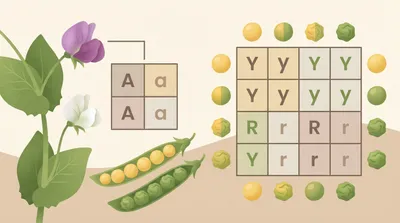
Mendelian inheritance: monohybrid and dihybrid crosses
Test your genetics fundamentals with monohybrid and dihybrid crosses, from simple dominance to classic Mendelian ratios. Work through Punnett squares, genotype/phenotype predictions, and probability questions with a balanced mix of easy, medium, and challenge items.
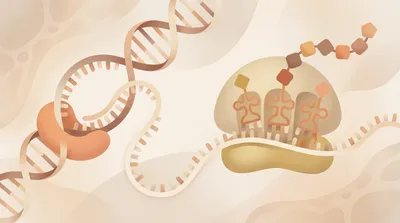
Gene expression: transcription and translation basics
Test your understanding of how cells turn DNA instructions into functional proteins. This quiz covers the core steps of transcription and translation, key molecules involved, and classic gene-expression terminology. Expect a mixed set of questions that builds from fundamentals to common exam-style scenarios.
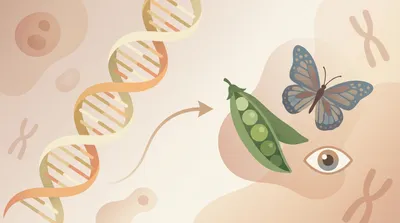
Genetics Basics: Genes To Traits
Explore how traits are inherited through genes and alleles. Covers Mendelian inheritance, dominant/recessive patterns, and simple Punnett-square reasoning.
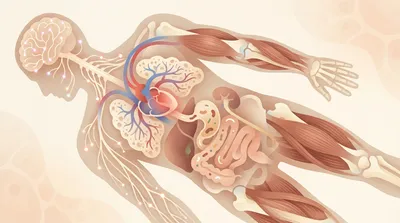
Human Body Systems And Functions
Test your knowledge of major human body systems and what they do. Covers organs, system interactions, and basic physiology terms.
Physics: Forces Motion And Energy
Test core physics concepts behind everyday motion. Covers Newton’s laws, friction, work and energy, momentum, and simple conceptual scenarios.

Astronomy: Stars Planets And Galaxies
Check your understanding of objects and processes in space. Covers star life cycles, planet types, galaxies, and basic observational astronomy terms.