Population growth: exponential and logistic
Test your understanding of population growth models in ecology, from rapid exponential increase to logistic growth with carrying capacity. Work through real-world scenarios and graphs to see how limit...
Start Quiz
Pick a difficulty and question count to begin.
About this quiz
What you’ll practice
Build confidence with exponential and logistic population models, including interpreting curves, parameters, and ecological meaning.
You’ll also practice translating word problems into model choices (unlimited resources vs carrying capacity) and spotting when growth rate changes over time.
Quiz format and difficulty
Each question has 4 options and there’s no timer, so you can slow down and reason through graphs and equations.
Choose your preferred question count and difficulty before you start: shorter runs for quick review, or longer sessions to cover more edge cases; mixed difficulty blends fundamentals with tougher interpretation questions.
Common pitfalls to avoid
A lot of mistakes come from mixing up r (intrinsic growth rate) with population size (N), or assuming logistic growth is “linear” near carrying capacity.
Another frequent slip is misreading axes on growth graphs (N vs time versus dN/dt vs N) and confusing density-dependent with density-independent limiting factors.
Tips for better scores
- Check whether resources are assumed unlimited (exponential) or limited by K (logistic)
- Watch for which graph is shown: N vs t, dN/dt vs t, or dN/dt vs N
- Remember logistic growth has the fastest increase around N ≈ K/2
- Distinguish per-capita growth rate from total growth (r vs rN)
- Treat “carrying capacity” as an environmental limit that can change, not a fixed law
- Use units and context clues (birth/death rates, immigration/emigration) to choose the model
Sample questions
What does the term 'exponential growth' refer to in ecology?
- A.Population growth at a constant rate without constraints
- B.Population growth that stabilizes over time
- C.Population decline due to limited resources
- D.Population growth influenced by predation
In logistic growth, what does the term 'carrying capacity' refer to?
- A.The maximum population size that an environment can sustain
- B.The initial population size
- C.The minimum population size needed for survival
- D.The rate of population growth
Which of the following is a characteristic of logistic growth?
- A.The population grows rapidly until it reaches a limit
- B.The population grows indefinitely
- C.The population size increases linearly
- D.The population decreases over time
Quiz FAQ
How many questions are in this quiz?
This quiz has 117 questions covering exponential and logistic population growth.
Is there a timer on the questions?
No. The quiz has no timer, so you can take your time on each question.
How many answer choices does each question have?
Each question includes 4 options, with one best answer.
What topics are covered besides the basic curves?
Expect carrying capacity, limiting factors, per-capita vs total growth, and interpreting different graph types.
How do difficulty and question count work?
You can select the question count and difficulty before starting; mixed difficulty balances core ideas with more challenging interpretation.
Play this quiz in another language(7)
Related Quizzes
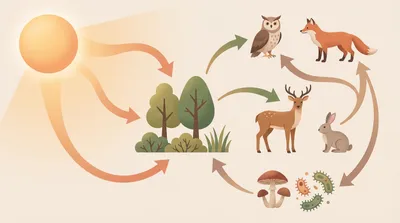
Energy flow in food webs
Trace how energy moves through ecosystems, from producers to top predators and decomposers. This mixed-difficulty quiz checks your understanding of trophic levels, food chains vs. food webs, and why energy is lost at each transfer. Choose your preferred question count and difficulty, then learn from clear, multiple-choice practice.

Nutrient cycles: carbon, nitrogen, and phosphorus
Track how carbon, nitrogen, and phosphorus move through ecosystems - from atmosphere and oceans to soils, organisms, and back again. This mixed-difficulty quiz checks key processes, reservoirs, and human impacts, with questions that range from basics to exam-style scenarios.
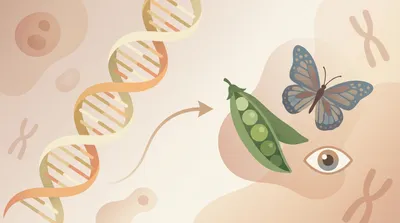
Genetics Basics: Genes To Traits
Explore how traits are inherited through genes and alleles. Covers Mendelian inheritance, dominant/recessive patterns, and simple Punnett-square reasoning.
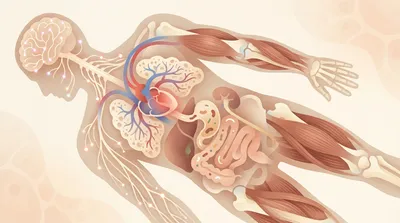
Human Body Systems And Functions
Test your knowledge of major human body systems and what they do. Covers organs, system interactions, and basic physiology terms.

Physics: Forces Motion And Energy
Test core physics concepts behind everyday motion. Covers Newton’s laws, friction, work and energy, momentum, and simple conceptual scenarios.

Astronomy: Stars Planets And Galaxies
Check your understanding of objects and processes in space. Covers star life cycles, planet types, galaxies, and basic observational astronomy terms.